

Airtel Share Price Target 2030: Outlook & Insights
📈 Explore Bharti Airtel’s 2030 share price outlook including key drivers, sector challenges, market trends, and expert opinions shaping long-term investor expectations.
Edited By
Edward Clarke
Bharti Airtel, one of India's leading telecom giants, often commands close attention from investors due to its significant presence in the telecom sector and evolving digital services ecosystem. Understanding the share price target for Bharti Airtel requires a clear look at the factors shaping its market valuation, ranging from financial results and competitive advantages to broader industry trends.
Recent quarterly earnings have shown mixed signals, with steady revenue growth in data services but pressures on margins due to rising network costs and spectrum investments. For example, Airtel's expansion into 5G technology and fibre broadband is capital-intensive, which affects short-term profitability but offers potential long-term gains.
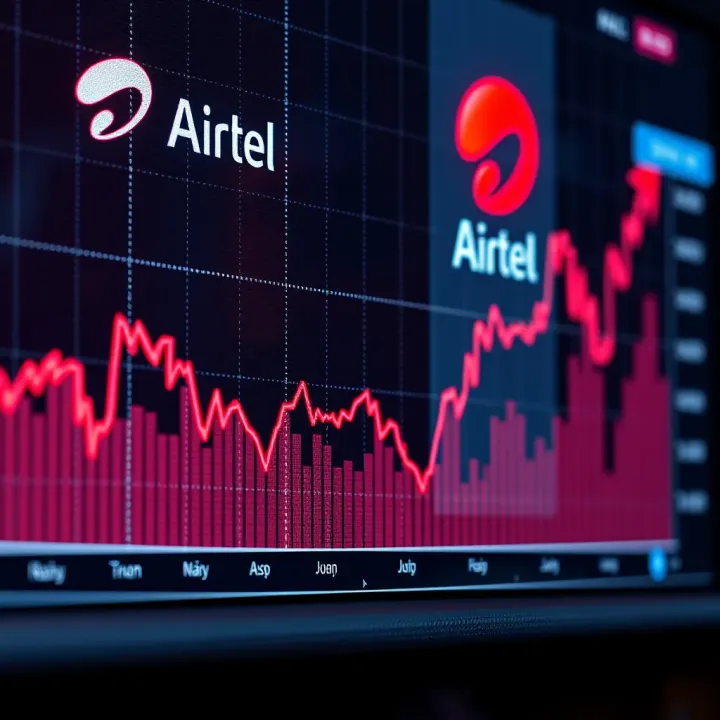
Investors should weigh Airtel's revenue growth and market share gains against the impact of capital expenditure and regulatory environment.
Analysts often base price targets on metrics like price-to-earnings (P/E) ratios, discounted cash flow (DCF) valuations, and comparisons with peer companies such as Reliance Jio and Vodafone Idea. Currently, many forecasts anticipate moderate upside, factoring in India’s expanding telecom subscriber base, growing data consumption, and digital adoption in rural areas.
Key aspects impacting price forecasts include:
Revenue diversification: Airtel's push beyond traditional telecom into digital payments and content platforms.
Regulatory challenges: Spectrum auctions and adjusted licensing fees can affect cash flows.
Competitive pressures: Intense price wars keep margins tight despite subscriber growth.
From an investment standpoint, a pragmatic approach should consider both short-term volatility linked to external factors like global economic shifts, and longer-term prospects tied to India's digital economy growth. For traders, tracking quarterly earnings and policy updates offers clear signals. Analysts often advise watching Airtel’s debt levels and cash generation for better risk assessment.
In short, anyone eyeing Bharti Airtel’s stock price targets must balance financial data with evolving industry dynamics. This cautious yet informed perspective helps in positioning portfolios effectively in the Indian telecom sector.
Understanding Bharti Airtel's business fundamentals and its position in the Indian telecom sector is essential for anyone looking to evaluate the company’s share price target. This section gives a clear picture of what the company does, its services, and where it stands in one of the largest and most competitive telecom markets globally. These insights help investors assess Bharti Airtel's potential for growth and challenges ahead.
Bharti Airtel is among India’s top telecom companies, offering a range of services including mobile voice and data, broadband, digital TV, and enterprise solutions. Its footprint extends beyond India, with operations in 18 countries across South Asia and Africa. For example, Airtel’s 4G services have reached millions in rural areas, reflecting its aggressive network expansion and coverage. Alongside traditional mobile services, Airtel has ventured into digital platforms like Airtel Xstream for content streaming and Airtel Payments Bank, broadening its revenue streams. This diversification shields the company against sector-specific risks and positions it well as India shifts towards digital-first consumption.
Within India, Bharti Airtel holds the second-largest market share, following Reliance Jio. Despite the stiff competition, Airtel maintains a strong presence through consistent investments in network quality and customer service. Its subscriber base crosses 35 crore, underscoring widespread popularity. Airtel’s focus on user experience, through enhanced data speeds and bundled offers, keeps it competitive. The company was also among the earliest to roll out 5G services in cities like Bengaluru, pushing it ahead on the technology curve. However, market pricing pressures and rising spectrum costs are challenges that can influence profitability and, by extension, share price.
A good grasp of Airtel's service suite and market position reveals how the company navigates Indian telecom’s fast-changing landscape — key when anticipating its share price movements.
Having a clear idea of Bharti Airtel's operations and sector position allows investors, traders, and analysts to judge the sustainability of growth and the risks embedded in the telecom space. This forms the basis to explore financial performance, analyst targets, and risk factors in subsequent sections.
Investors tracking Bharti Airtel’s share price should pay close attention to recent financials and key indicators. These figures offer a snapshot of the company’s health and growth potential, helping to anticipate market movements and valuation changes. Focusing on revenue trends, profits, subscriber numbers, capital expenditure, and debt levels can reveal how Airtel balances operational expansion alongside financial discipline.
Bharti Airtel’s revenue patterns hold significant weight in assessing its business momentum. For instance, the company's consistent growth in service revenue, propelled by rising data consumption and premium offerings like 4G and 5G, indicates strong market demand. The quarterly revenue jump to around ₹24,000 crore in FY 2023-24 signals healthy operations. Profit margins, too, matter – a steady or rising net profit margin suggests efficient cost management amid competitive pressures. Airtel’s ability to maintain EBITDA (Earnings Before Interest, Taxes, Depreciation and Amortisation) growth despite price wars highlights operational robustness.
Subscriber count directly impacts Airtel’s revenue and market standing. With over 35 crore subscribers, Airtel commands a significant chunk of the Indian telecom market. A rising subscriber base, especially in key revenue-generating 4G and soon-to-be 5G segments, strengthens its market position. Equally important is churn rate—the percentage of customers leaving. Lower churn means better customer retention, often reflecting service quality and brand loyalty. Tracking Airtel’s market share against rivals such as Reliance Jio and Vodafone Idea offers insight into competitive dynamics shaping its pricing power and growth avenues.
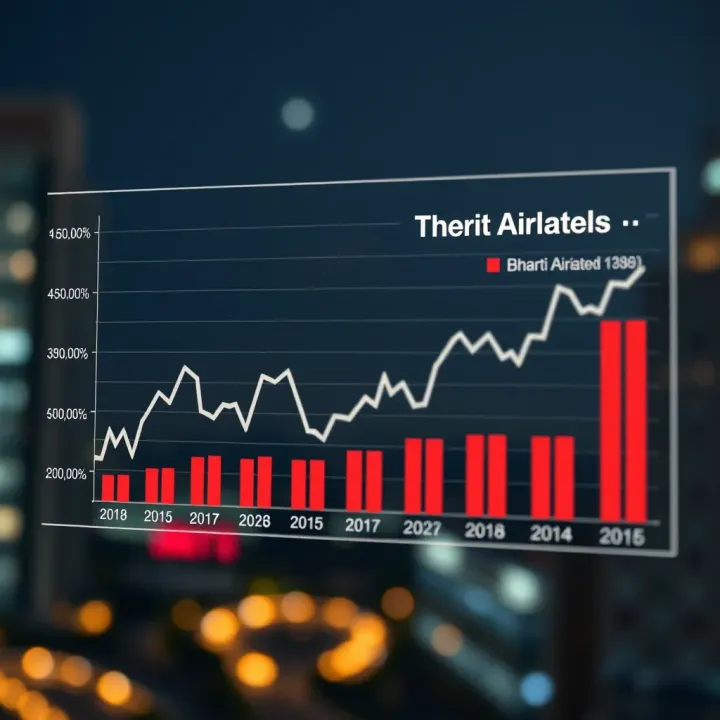
Bharti Airtel’s investment in network infrastructure is vital to sustaining long-term growth, especially around 5G rollout readiness. Recent capital expenditure (capex) figures running into thousands of crores highlight the scale of such investments. However, heavy capex can strain finances if not managed prudently. Concurrently, Airtel’s debt levels and leverage ratios must be watched closely. A manageable debt-to-equity ratio ensures the company isn’t overburdened, maintaining financial flexibility. For example, Airtel’s efforts to reduce net debt from peak levels while funding aggressive network expansion reflect balanced financial planning.
Understanding these financial signals helps investors judge whether Bharti Airtel's current share price aligns with underlying business realities and future prospects. Keeping an eye on these indicators supports smarter entry or exit decisions in the stock.
By tying revenue growth, subscriber metrics, and financial health together, investors get a clearer view of Airtel’s operational strength and risk factors. This approach goes beyond headline numbers, offering practical insights essential for evaluating Bharti Airtel’s share price trajectory in a competitive Indian telecom market.
Understanding the industry trends is vital for grasping the forces that move Bharti Airtel's share price. These trends reflect the market environment, competitive dynamics, and technological shifts, all of which shape investor sentiment and company performance. Bharti Airtel operates in a rapidly evolving telecom market, and staying on top of these trends helps investors predict how external factors could impact the stock's value.
Telecom regulations in India heavily influence Airtel's business model and profitability. For example, the adjustments in spectrum auction pricing or the imposition of licensing fees directly affect costs. The recent Supreme Court verdict on adjusted gross revenue (AGR) dues put significant strain on all operators, including Airtel, impacting financial outlooks and leading to cautious investor behaviour. On top of that, regulatory steps promoting data security and net neutrality might require additional investments, affecting profit margins long term. Therefore, keeping an eye on policy updates from the Telecom Regulatory Authority of India (TRAI) and announcements by the Department of Telecommunications (DoT) is a must for shareholders.
Bharti Airtel faces stiff competition from Jio and Vodafone Idea in the Indian telecom scene. Jio's aggressive pricing strategies and vast customer acquisition campaigns have reshaped market expectations, forcing Airtel to adopt similar tactics that may pressure short-term earnings. Vodafone Idea's financial difficulties and potential consolidation talks add an element of uncertainty, influencing Airtel’s market share and pricing power. Investors should watch subscriber growth numbers, average revenue per user (ARPU), and churn rates closely since these metrics reflect how well Airtel holds or expands its customer base amid competition.
The roll-out of 5G technology marks a game-changer for Indian telecom companies, and Airtel is racing to deploy 5G services across key cities. Technology investments can boost future revenue streams through new products and enterprise solutions, but substantial capital expenditure (capex) short term affects liquidity and profit margins. Adoption speed among consumers and support from handset manufacturers also matter here. Airtel’s partnerships with global tech firms and progress in fibre optic network expansion are positive indicators for investors. Watching how Airtel balances innovation investment with maintaining healthy cash flows provides insight into its share price momentum.
Industry forces like regulatory landscapes, competitive pressures and tech upgrades intertwine to shape Bharti Airtel’s financial health and, consequently, its share price movements.
In summary: investors need to track policy shifts, market competition, and technological developments closely. Each trend individually affects Airtel’s prospects, but together they define the company’s path and stock performance in the fast-moving Indian telecom sector.
Analysts' share price targets provide a forecasted value at which Bharti Airtel's stock might trade in the near to medium term. These targets help investors form expectations about the company’s financial outlook and market position. Understanding how analysts arrive at these targets can guide you in making informed decisions, especially in a sector as dynamic as telecom.
Bharti Airtel’s share price targets tend to vary between ₹750 and ₹1,000 over the next 12 months, depending on the analyst and market conditions. For example, some analysts expect growth from Airtel's expanding 5G network rollout and enhanced data revenue, while others are cautious due to rising competition and regulatory pressures. These targets often adjust after quarterly results or policy updates, reflecting shifts in profitability forecasts or subscriber trends. Tracking a range of analyst viewpoints gives a more realistic picture rather than relying on a single estimate.
The widely used methods to value telecom stocks like Bharti Airtel include the Price-to-Earnings (P/E) ratio, Discounted Cash Flow (DCF) analysis, and Enterprise Value to EBITDA (EV/EBITDA). The P/E ratio looks at current market price relative to annual earnings, useful for quick comparisons with peers like Reliance Jio or Vodafone Idea. DCF methods factor in future cash flows discounted back to present value, which suits telecom companies with predictable revenue streams but requires careful assumptions about capital expenditure and ARPU (average revenue per user). EV/EBITDA gives insight by comparing enterprise value (market cap plus debt, minus cash) to earnings before interest, tax, depreciation, and amortisation, balancing operational efficiency with capital structure.
Several key elements cause analysts to revise Bharti Airtel’s share price targets. Positive triggers include faster 5G adoption, successful cost optimisation, or market share gains. For example, if Airtel manages to increase ARPU through value-added services, the outlook improves. Conversely, regulatory changes like spectrum fee hikes, intense price wars leading to margin pressure, or macroeconomic challenges such as currency fluctuations against the dollar can drag targets down. Additionally, unexpected debt rises or delays in infrastructure rollout might also prompt downward revisions.
Analysts’ targets are not guarantees but informed estimates. They reflect complex factors and need regular review as market realities change.
Understanding these valuation methods and monitoring analyst updates can better equip you to gauge how Bharti Airtel’s share price might move, helping you plan your investment strategy effectively.
Every investor looking at Bharti Airtel's share price should keep a close eye on several risks and challenges that can shape the stock's future. Understanding these factors helps prevent surprises and allows more informed decisions. Let’s break down the key risks relevant to Bharti Airtel.
Telecom is among the most regulated sectors in India. Changes in spectrum fees, licence renewals, or rules around interconnection charges can directly impact Airtel’s profitability. For example, the Supreme Court’s 2020 ruling on adjusted gross revenue (AGR) dues shook the industry, leading to litigation and hefty payments. Policy delays or unclear regulations around 5G spectrum auctions also add uncertainty. Investors should watch announcements from the Telecom Regulatory Authority of India (TRAI) and the Department of Telecommunications closely, as these decisions can trigger sharp share price movements.
Bharti Airtel faces stiff competition from Reliance Jio and Vodafone Idea, which keeps pricing aggressive. Jio’s disruptive pricing and extensive infrastructure investments have forced Airtel to balance subscriber growth against margin pressures. This price war hits average revenue per user (ARPU), an important metric for telecom stocks. Additionally, bundling offers or free services from rivals could erode Airtel’s market share if not countered effectively. Investors need to watch market share trends and pricing changes, since prolonged price cuts may weigh on earnings and share valuations.
External economic factors also play a role. For instance, rising interest rates can increase Airtel’s borrowing cost, affecting profitability. Currency fluctuations matter too, especially since Airtel operates in multiple countries and takes foreign loans. Global chip shortages or delays in telecom equipment supply may slow down network expansion or 5G rollout, impacting future growth prospects. On top of that, inflationary pressures in India could raise operational costs. These macro dynamics add another layer of risk that can’t be ignored by investors targeting Bharti Airtel shares.
Staying alert to these risks helps investors better judge when to enter or exit Bharti Airtel stock. While the company shows strong fundamentals, facing these challenges head-on will influence its future share price trajectory.
To sum up, regulatory shifts, intense competition, and broad economic conditions form the main hurdles for Bharti Airtel. Careful monitoring and timely analysis of these risks will assist in managing investment outcomes more effectively.
Investing in Bharti Airtel requires a clear understanding of its market dynamics, financial health, and growth potential. This section unpacks key factors investors should weigh before buying or selling Airtel shares. Recognising how long-term growth prospects, dividend policies, market timing, and portfolio balance affect returns is crucial to making informed decisions.
Bharti Airtel’s long-term outlook depends heavily on its expansion into 5G technology and digital services beyond traditional telecom offerings. The company’s aggressive rollout of 5G infrastructure in major metros suggests a potential boost in revenue streams over the next few years. For instance, Airtel’s partnership with global tech companies aims to develop cloud and IoT services, which could diversify income sources.
Dividend policies also shape investment appeal. Airtel has maintained a moderate dividend payout ratio, balancing shareholder returns with capital needs for expansion. While the dividend yield might not match some blue-chip stocks, consistent payouts signal financial discipline. Investors seeking steady income alongside capital gains should view Airtel’s dividend history as a positive metric.
Market volatility affects when investing in Airtel shares might be most beneficial. Prices often dip following regulatory announcements or competitor moves, presenting buying opportunities for those who watch such events closely. For example, after the introduction of adjusted spectrum fees or tariff rebalancing by TRAI (Telecom Regulatory Authority of India), Airtel’s share price has shown temporary declines that later rebounded.
New investors should consider averaging their purchase through Systematic Investment Plans (SIPs) or staged buying, instead of lump-sum investments. This approach reduces risk from timing the market poorly and smoothens entry points amid price swings.
Including Bharti Airtel shares in a diversified portfolio helps manage sector-specific risks. Telecom stocks may react ahead of regulatory changes, technological disruptions, or competitive pricing battles. Investors relying solely on Airtel could face disproportionate impact from these factors.
A balanced portfolio might combine Airtel with shares from other sectors like FMCG, IT, or pharmaceuticals to spread risk. Within telecom exposure, pairing Airtel with competitors like Reliance Jio or Vodafone Idea can also lower volatility.
Diversification does not guarantee profits but helps cushion against adverse shocks, making it a wise practice especially for equity investors in fast-changing sectors like telecom.
For risk management, keep an eye on debt levels and industry regulations affecting Airtel. Regularly reviewing your holdings in response to market and company updates will ensure your investment aligns with your risk appetite and financial goals.
Together, these strategies help investors engage with Bharti Airtel shares more confidently, balancing growth hopes with practical safeguards for sustainable investment outcomes.
📈 Explore Bharti Airtel’s 2030 share price outlook including key drivers, sector challenges, market trends, and expert opinions shaping long-term investor expectations.

📈 Discover what drives Box share price, its market trend, and performance vs peers. Get practical insights to analyse and invest confidently in this dynamic stock market option.

📈 Explore how Reliance Industries' share price might evolve by 2050, analyzing business trends, market factors, and risks for Indian investors looking ahead.

📈 Explore Reliance Industries' target price for 2030 with detailed analysis of its business, financials, market trends, and investment risks in India 🇮🇳.
Based on 5 reviews