

Reliance Industries Share Price and Growth Outlook 2030
📈 Explore Reliance Industries' share price targets and growth plans till 2030, with expert forecasts, market insights, and India’s economic link.
Edited By
Isabella Green
Brett Icahn stands out in the investment world as a forceful strategist and astute businessman. As the son of famed investor Carl Icahn, he inherited a sharp eye for value and corporate manoeuvring but carved his own path within Icahn Enterprises. His role there has been pivotal, driving initiatives that often reshape company frameworks and shareholder priorities.
Icahn's investment style is well known for mixing aggressive activism with deep industry insight. Instead of passively holding shares, he actively pushes for changes that unlock long-term value. This hands-on approach has earned him both respect and criticism, showing the balance needed in corporate governance today.

Beyond the boardroom, Brett Icahn's influence touches multiple industries, from manufacturing to technology. His investments focus on companies with solid fundamentals but untapped potential due to inefficiencies or management styles. He stands out for identifying and improving such companies, often leading to significant gains for shareholders.
"He doesn’t just invest; he recalibrates companies to thrive in changing environments."
For Indian investors and market watchers, watching Brett's moves provides valuable lessons in shareholder activism and strategic leadership. His methods illustrate how investors can engage beyond mere ownership, influencing decisions for better transparency and operational efficiency.
In this article, we explore Brett Icahn's background, his investment philosophy, significant ventures, and his impact on global and Indian financial landscapes. Understanding his approach offers practical insights for traders, brokers, analysts, and seasoned investors aiming to sharpen their understanding of dynamic market strategies.
Origins and career development of Brett Icahn
Investment strategies that differentiate him
Role within Icahn Enterprises and leadership style
Influence on corporate governance and shareholder activism
Practical takeaways for Indian financial professionals
This broad yet focused view will help you grasp how Brett Icahn has become a notable figure in finance, inspiring new thinking in investment and corporate leadership practises.
Understanding Brett Icahn’s early life and family background provides key insights into the foundations of his investment mindset. The influence of his family, particularly his connection to Carl Icahn, and the environment where he grew up shaped his practical approach to finance and investing.
Brett Icahn is the son of Carl Icahn, one of the most famous activist investors globally. This relationship opened doors to unique learning experiences and real-world exposure to corporate takeover strategies and shareholder activism from a young age. Brett benefited from observing Carl’s dealings firsthand, seeing how strategic investment decisions could influence company management and shareholder value.
The practical relevance of this connection lies in the transfer of knowledge and network advantages. For example, Brett’s early involvement in Icahn Enterprises was a direct result of his father’s legacy, offering him a launchpad unlike most newcomers. However, he has also worked to establish his distinct investment style, blending inherited principles with his own insights.
Growing up in a finance-centric environment, Brett Icahn was exposed to stock market dynamics and business operations early on. This early introduction allowed him to understand the volatility of markets and the importance of thorough research. It’s similar to a trader who learns the rhythm of markets through daily practice rather than theory alone.
This exposure helped Brett develop practical skills, such as evaluating company financials and recognising undervalued stocks, long before formal education shaped his knowledge. For traders and investors, this highlights the value of access to real-world experience alongside academic learning.
Brett Icahn attended Princeton University, where he completed his degree with a focus on subjects that strengthened his analytical and decision-making skills. A solid academic grounding in economics and finance provided him with the technical knowledge necessary to supplement the practical lessons learnt at home.
Such academic credentials are significant for anyone looking to enter investment fields, as they offer rigorous frameworks to assess market opportunities and risks. It’s not just the qualification but the discipline and critical thinking fostered during university studies that equip investors for complex financial landscapes.
After his formal education, Brett Icahn started his career within the family firm, Icahn Enterprises. He began by engaging with operational aspects and portfolio management, gradually taking up more responsibility in strategic decision-making.
Starting within a familiar setting allowed Brett to apply theoretical knowledge to live market scenarios, learning how to navigate corporate governance challenges and shareholder demands. For finance professionals, this example demonstrates how early career roles that blend strategy and execution build a robust foundation for leadership in investment management.
Brett Icahn’s early life combined family influence, academic rigor, and hands-on experience—elements that together shaped his nuanced investment approach and leadership style.
Brett Icahn's investment philosophy centres on spotting value where others may overlook it. His strategy combines sharp analysis with active involvement in the companies he invests in, making his approach both hands-on and deeply tactical. Understanding his philosophy clarifies how he drives returns and influences corporate decisions.

Icahn looks for companies or assets trading below their intrinsic worth. This means he identifies firms with solid fundamentals but whose stock price does not reflect their true value — perhaps due to temporary setbacks or market scepticism. For instance, buying shares in a company after a public relations crisis can pay off if the business has strong cash flows and competitive advantages.
This approach helps reduce downside risk while offering attractive upside potential. Instead of chasing hype or volatile growth stocks, Icahn emphasises investing in companies that the market undervalues, banking on recovery and improvement.
While often viewed as an activist investor with a focus on short-term gains through influencing management, Brett Icahn also holds stakes for the long haul when fundamentals remain strong. Long-term investment allows him to benefit from structural improvements and compounding returns.
Short-term positions, on the other hand, come into play when there is a clear catalyst for change, such as restructuring or asset sales. Icahn balances between these horizons depending on the situation, but always with a strong research foundation to back his moves.
Icahn doesn't just invest silently; he actively engages with the leadership of companies where he holds substantial stakes. This means directly communicating concerns, proposing strategic changes, or pushing for operational improvements. Such engagement often prompts management to reconsider existing plans or unlock hidden value.
This direct dialogue can increase transparency and alignment between shareholders and executives, ultimately boosting the company's market value.
Beyond individual companies, Brett Icahn works to enhance corporate governance standards. He advocates for reforms that empower shareholders—like better board accountability, transparent disclosures, and fair executive compensation. These steps protect investors' interests and can improve long-term company health.
His activism often leads to broader market effects, encouraging other firms to adopt stronger governance practices to avoid shareholder disputes or activist campaigns.
Brett Icahn's blended approach of value investing and active shareholder engagement exemplifies how investors can influence not just portfolio returns but also company direction and governance standards.
Leadership at Icahn Enterprises offers a window into how Brett Icahn shapes one of India and the world's leading investment firms. His role is not just about holding titles; it's about steering the company through complex markets and ensuring its long-term growth. For investors and analysts, understanding his leadership provides clues to the company's strategy and future direction.
Brett Icahn holds key executive roles within Icahn Enterprises, including that of a senior advisor and board member, where he contributes to shaping the company’s broad strategy. While his father Carl Icahn is more prominent publicly, Brett’s leadership role is significant—the day-to-day decisions he influences often have lasting effects on the company’s investments and governance.
His position enables him to interact closely with different business units and investment teams, helping align their efforts with the broader goals of Icahn Enterprises. This proximity to operations allows Brett to identify inefficiencies and suggest actionable improvements, which benefits shareholders and stakeholders alike.
Strategic decision-making at Brett’s level involves evaluating potential acquisitions, divestitures, and capital allocation. He advises on prioritising assets that align with value investing principles, ensuring capital is used efficiently. By focusing on tangible long-term benefits, Brett helps Icahn Enterprises avoid short-term market noise, which can mislead less seasoned investors.
Brett Icahn has played an integral role in selective acquisitions that have expanded the company’s portfolio. Under his influence, Icahn Enterprises made strategic investments in energy, automotive, and real estate sectors, helping diversify its revenue streams. For example, acquiring certain logistics assets and energy firms has positioned the company to benefit from shifting market dynamics.
This diversification shields the company from sector-specific downturns—a practical advantage for investors seeking stability in uncertain markets. Brett’s involvement in these moves shows a calculated balance between risk and opportunity, which has helped the company sustain growth even during turbulent economic periods.
Beyond traditional sectors, Brett has supported expansion into newer areas like technology and infrastructure, enabling the company to capture future growth trends. By identifying high-potential sectors early, the company can allocate resources more wisely, staying ahead of competitors who focus on conventional investments.
Brett Icahn’s leadership blends hands-on operational involvement with strategic foresight, making him a vital force behind Icahn Enterprises’ ability to grow and adapt across industries.
For investors and finance professionals, tracking Brett's initiatives offers insights into upcoming investment themes and corporate governance standards that often ripple beyond the company itself.
Brett Icahn's major investments and business ventures form a vital part of his legacy as a top investor. His strategic moves in stock markets and M&A deals offer practical lessons on spotting value and influencing corporate directions. In this section, we'll break down his notable transactions and the wider market effects they caused.
Brett Icahn is well-known for acquiring substantial stakes in companies that often appear undervalued or mismanaged. These purchases aren't just about owning shares; they serve as a platform to influence company strategy. For instance, his investments in sectors like energy and technology demonstrate a keen eye for spotting firms with growth potential but operational inefficiencies. By taking large positions, Icahn gains leverage to push for changes that can unlock shareholder value.
Such significant stock purchases also signal confidence to other investors, sometimes triggering a ripple effect in the market. Traders and analysts watch his moves closely, interpreting them as insider insights on undervalued opportunities. Practically, this creates room for both active investors and fund managers to re-evaluate their positions around these companies.
Brett Icahn has actively engaged in mergers and acquisitions, not just as a passive investor but often as an activist challenging the status quo. His involvement includes influencing deal structures, advocating for shareholder-considerate terms, and even opposing poor acquisitions. This hands-on approach aims to protect or enhance investment returns.
By participating in M&A activities, Icahn helps shift company trajectories. His interventions have led some firms to reconsider asset sales or restructurings, improving operational focus. This participation also underscores how active investment strategies can shape corporate governance and growth paths beyond merely buying shares.
Icahn's involvement frequently results in tangible changes within his target companies. These may include improved management accountability, board reshuffles, or strategic pivots towards profitable ventures. Such shifts often align companies closer to core competencies, improving long-term sustainability.
For example, his push for cost-cutting measures or asset optimisations has turned around businesses that once struggled with inefficiencies. These changes do more than just lift a stock's price temporarily; they rebuild trust among stakeholders and realign corporate culture for better outcomes.
Active investors like Brett Icahn can act as catalysts for operational and governance improvements, benefiting not only shareholders but also employees and customers.
Icahn's moves tend to influence investor sentiment significantly. When he takes a position in a company or intervenes in its affairs, it often boosts market confidence. Investors perceive his involvement as a sign that the company has untapped value or is on the path to better governance.
This effect is particularly strong in volatile markets, where a known figure's endorsement can stabilise investor perceptions. On the flip side, his activism may also create short-term uncertainty, especially if it involves major management changes. However, over time, such actions typically enhance market efficiency by aligning company practices with shareholder interests.
In summary, Brett Icahn’s major investments and business ventures showcase how targeted stock acquisitions and active M&A participation can reshape industries and investor behaviour. His approach offers valuable lessons on balancing strategic ownership with hands-on management influence.
Brett Icahn's philanthropic efforts and public profile play a significant role in shaping how he is perceived beyond the investment world. His charitable initiatives reflect a commitment to giving back, while his public statements and reputation influence corporate governance and investor confidence. This section sheds light on these crucial aspects, which add depth to his legacy as an influential investor.
Brett Icahn has directed substantial funds towards social causes, particularly supporting non-profit organisations focused on poverty alleviation and disaster relief. For instance, his contributions to relief efforts during natural calamities have provided immediate aid in affected communities. These donations not only help with emergency responses but also set an example of responsible wealth usage among India's rich class and global investors alike.
Moreover, Brett's philanthropic focus extends to sustainable development projects, including clean water initiatives in rural regions. His support for such causes enables long-term improvements in living standards, showcasing how investors can contribute beyond immediate financial returns.
Investment in education constitutes a critical part of Brett’s social outreach. He endorses scholarships and infrastructure development in schools located in underprivileged areas. By doing so, he addresses systemic barriers that prevent access to quality education, which in turn can foster economic empowerment.
In healthcare, Brett has backed programmes aimed at improving access to essential medical services, including vaccination drives and rural health camps. These initiatives ease the pressure on public health systems and provide critical support in regions lacking adequate facilities, further emphasising his broader social responsibility.
Brett Icahn's engagement with the media offers valuable insights into his investment strategies and opinion on market trends. His candid interviews often reveal his rationale behind major decisions, helping investors and analysts understand the underlying dynamics of his portfolio moves.
Such openness also influences market sentiment, as his views on economic policies or corporate governance can sway investor confidence. This transparent communication helps demystify shareholder activism and encourages more informed market participation.
Within the business circle, Brett Icahn commands respect for his strategic acumen and ethical approach to shareholder activism. His role in steering corporate reforms, while robust, tends to balance profitability with sound governance. This nuanced reputation strengthens his influence over partnerships and collaborative ventures.
Nonetheless, his assertive style sometimes invites criticism, reflecting the complex nature of activist investment. Yet, this dual image reinforces the broader discussion on investor responsibilities in India’s evolving corporate landscape.
Brett Icahn’s philanthropic and media engagements collectively enhance his stature, making him a well-rounded figure whose impact extends beyond financial markets to social and corporate governance realms.
Supports disaster relief and sustainable development
Invests in education and healthcare
Shares insights through media interviews
Recognised for strategic yet responsible activism
This combination ensures Brett’s legacy touches various facets of society, relevant to investors who aim to blend financial success with social good.
📈 Explore Reliance Industries' share price targets and growth plans till 2030, with expert forecasts, market insights, and India’s economic link.
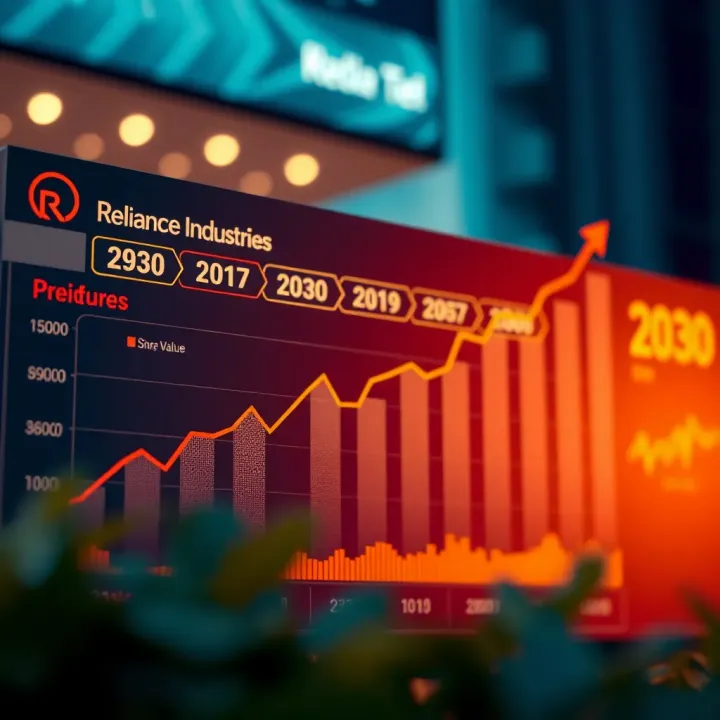
🔍 Explore Reliance Industries' growth prospects to 2030, covering market trends, company strategies, and expert predictions for informed investing. 📈

📈 Explore how Reliance Industries' share price might evolve by 2050, analyzing business trends, market factors, and risks for Indian investors looking ahead.

📈 Discover Ripple XRP price trends, expert views, market risks, and how global events might impact its future value. A must-read for Indian investors!
Based on 5 reviews