
RIL Share Price Forecast and Key Influences by 2030
📈 Explore how Reliance Industries Limited's share price might evolve by 2030, considering its strategies, industry trends, risks, and growth factors affecting investors.
Edited By
Amelia Scott
Natural gas prices rarely stay still, shifting constantly with changes in supply, demand, weather, and politics. Traders and investors who want to anticipate tomorrow’s market need to understand these key drivers clearly. The global natural gas market today is strongly interconnected, where events in one region can ripple across others, including India’s growing energy landscape.
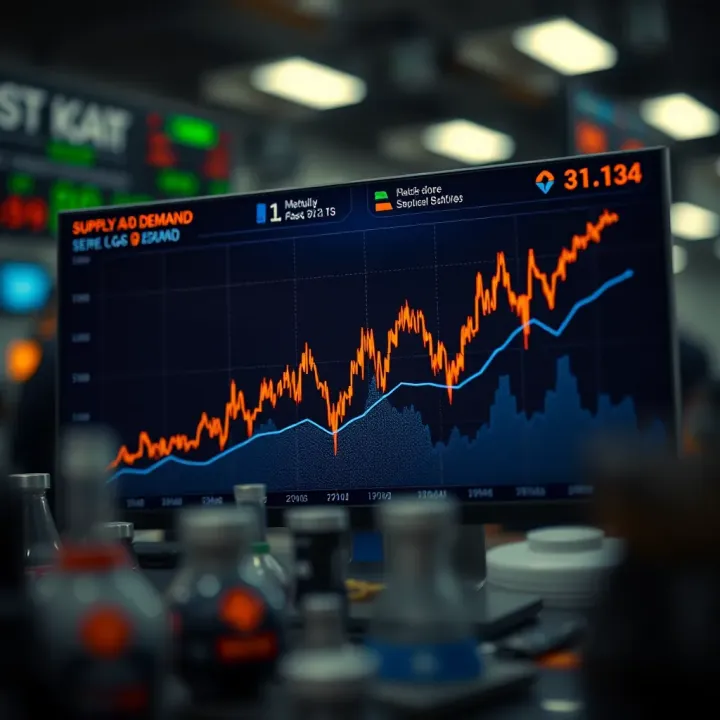
At the heart of price movements lie supply and demand dynamics. For example, disruptions in major exporting countries like Qatar or Russia can tighten global supply swiftly, pushing prices up. Conversely, advances in shale gas production in the US often create downward pressure. In India, rising demand from power plants and industries, coupled with fluctuating domestic output, plays a crucial role.
Weather patterns also have a direct impact. Colder winters in the northern hemisphere increase heating needs, boosting gas consumption. Similarly, a hot summer can raise electricity demand for cooling, affecting natural gas-powered generation. Monsoon variability in India, affecting hydroelectric capacity, may shift energy consumption balance towards gas, influencing prices locally.
Geopolitical affairs add a layer of uncertainty. Sanctions on key producers, territorial disputes affecting supply routes, or unexpected political changes can lead to sudden price swings. For instance, tensions around the Russia-Ukraine conflict have repeatedly influenced European gas prices, indirectly impacting Asian markets through LNG trade flows.
Market trends and speculative activity further shape prices. Futures contracts, storage levels, and transport infrastructure constraints factor into daily price swings. Indian traders often follow changes on the National Stock Exchange (NSE) and global benchmarks like Henry Hub closely to adjust their positions.
Understanding these factors together helps market participants make informed decisions rather than reacting to price movements alone.
In summary, natural gas price forecasting hinges on grasping supply-demand shifts, weather influences, geopolitical developments, and market behaviour. For investors and brokers, appreciating the nuanced interplay of these elements is essential to stay ahead in an ever-changing market.
Understanding the basics of natural gas markets is essential for anyone who wants to predict price movements accurately. Prices hinge on how much gas is produced versus how much is demanded, plus how external factors like weather impact these balances. Knowing these fundamentals helps investors and traders anticipate market shifts and avoid surprises.
Natural gas production directly impacts availability and prices. For example, when production dips due to maintenance shutdowns or geopolitical tensions in key supply regions like the Middle East or the US shale basins, prices tend to rise. Conversely, increased output, such as recent growth in Indian domestic production, may ease price pressures.
Storage levels also play a crucial role. India’s limited underground storage compared to countries like the US means demand spikes can quickly send prices upward if supply can’t catch up. Traders watch storage reports closely to assess short-term supply security.
Demand for natural gas in India varies across sectors including power generation, fertilisers, and city gas distribution. For instance, during festival seasons or agricultural cycles, fertiliser consumption surges, pushing up natural gas demand. Similarly, industries reliant on cheap and steady gas supply face cost risks when demand heats up, affecting their output and competitiveness.
Urban households switching to piped natural gas (PNG) also contribute to steady demand growth, particularly in metropolitan areas. Such changes highlight the need to track consumption patterns sector-wise to identify real demand shifts driving price changes.
Seasonality heavily influences gas usage. Winter months require more heating, pushing up demand in northern India, whereas summer increases cooling loads via electricity generation, raising gas consumption indirectly. The transition months see fluctuating demand that can result in price volatility.
Seasonal storage plays into this too; inadequate storage before winter can cause sharp price spikes. India’s monsoon season impacts supply logistics and demand, adding another layer to seasonal price effects.
Temperature changes affect gas demand sharply. For example, an unusually cold spell in Delhi or Punjab raises heating needs, driving prices higher. Warm winters often lead to price softening as consumption dips. Traders analyse temperature forecasts to anticipate short-term demand swings.
Monsoons influence electricity demand from hydropower and gas-powered plants. Heavy rains boost hydropower, reducing gas-fired power station use and thus lowering gas demand temporarily. Conversely, delayed or weak monsoons increase thermal power reliance, ramping up gas demand and prices. This interdependence makes monsoon predictions a key part of price forecasting.
Severe storms or floods can disrupt pipeline operations and gas extraction, tightening supply unexpectedly. For instance, floods in Assam or Odisha can hamper transport infrastructure, creating supply bottlenecks and price shocks. Awareness of vulnerable regions and weather risks helps market participants plan for sudden price moves.
Monitoring these fundamental factors — production, demand, seasonal shifts, and weather impacts — provides a strong foundation for understanding natural gas price dynamics. For traders and investors alike, this knowledge aids in managing risks and seizing opportunities in the ever-changing energy market.
Geopolitical and economic events shape natural gas prices significantly, especially in times when supply tightens or demand surges unpredictably. For traders and investors, understanding these influences helps anticipate price swings and manage risks effectively. For instance, political instability in major gas-producing regions can disrupt exports, while economic signals reveal shifting demand patterns that impact market sentiment.
Regions like the Middle East or Eastern Europe have repeatedly faced conflicts that interrupt natural gas flows. For example, tensions around the Russia-Ukraine border affect gas transit pipelines to Europe, creating supply uncertainties that push prices up. Investors closely watch such hotspots because even a short-term disruption can ripple across global markets.
Similarly, domestic unrest in countries like Nigeria or Libya, which export gas or LNG, can reduce available volumes suddenly. These interruptions often cause sharp price spikes, particularly when global inventories are low or demand robust.

Although OPEC mainly controls crude oil, its decisions indirectly affect natural gas markets, since many producers handle both hydrocarbons together. A cut in oil production, for example, can shift investment focus or affect associated gas output. Also, OPEC+ agreements involving countries outside the cartel influence global energy supply dynamics.
Non-OPEC players like the United States, Qatar, or Russia play vital roles too. Their production changes, for instance increased LNG exports from the U.S., can ease or tighten supply balances. Traders monitor production targets, quotas, and announcements from these groups to gauge future availability and price directions.
Trade restrictions and sanctions on key producers notably impact natural gas supply chains. The Western sanctions on Russia since 2022 have severely limited Europe's direct gas imports, forcing a market reshuffle and price volatility.
Sanctions often force buyers to seek alternative sources, increasing logistic costs and affecting freight pricing, which flows into final gas prices. Regional trade agreements and export tariffs also play a role, especially in countries reliant on gas imports like India, where policy shifts can alter procurement costs quickly.
Demand shifts are critical for price forecasting. A growing global economy usually means higher industrial and power generation demand, pushing prices up. Conversely, economic slowdowns reduce consumption, lowering prices.
For instance, China's recent industrial activity recovery or India’s expanding gas-based power capacity can boost demand outlooks. Traders use indicators like GDP growth rates, manufacturing output, and vehicle sales to estimate near-term energy needs.
Natural gas trade is generally priced in USD, so fluctuations in the dollar affect prices worldwide. When the rupee weakens against the dollar, imported gas becomes costlier for India. This drives up domestic prices and inflation.
Conversely, a stronger rupee can ease import costs, benefiting consumers and industries. Traders must consider forex trends alongside energy fundamentals, as exchange rate volatility can offset supply-demand effects on prices.
Natural gas futures prices reflect market sentiment and expectations. A bullish futures curve suggests anticipated supply tightness or rising demand, while a bearish curve signals an oversupplied market.
Additionally, stock market reactions to geopolitical or economic news provide quick sentiment cues. For example, sharp falls in energy company shares during a conflict hint at looming supply issues, which can foreshadow price jumps. Investors often watch both futures and equity movements to time their trades wisely.
Understanding geopolitical tensions, economic trends, and market sentiment forms the backbone of effective natural gas price forecasting. Keeping a close eye on these factors helps you navigate market fluctuations more confidently.
Understanding price trends and forecasting models is essential for anyone involved in natural gas markets, whether traders, investors, or analysts. These tools help anticipate future price movements, plan investments, and manage risk in an inherently volatile sector. With supply-demand dynamics shifting rapidly and external factors like geopolitical events impacting prices, relying on historical data and predictive models becomes crucial.
Natural gas prices have seen considerable fluctuations recently, influenced by factors such as demand recovery post-pandemic and supply constraints. In India, spot prices have reacted sharply to seasonal shifts and LNG import availability, while global markets faced pressures from geopolitical tensions and crises like the Ukraine war impacting supply chains. For example, in FY 2023-24, India witnessed price spikes just before the winter months due to increased residential heating demand, tightened by international LNG prices climbing.
This volatility isn't isolated; global markets often set the tone for Indian prices, given India's heavy reliance on imports. Awareness of these recent price movements helps market participants gauge where prices may head in the near term.
Several factors cause volatility in natural gas prices. Sudden geopolitical developments, like sanctions on major exporters or conflicts disrupting supply routes, immediately shift the market. Weather changes, particularly unpredictable monsoons in India, affect consumption patterns and thus influence price swings.
Markets tend to react swiftly—futures contracts might show sharp price jumps or drops reflecting traders' sentiments. For instance, a monsoon forecast showing below-average rainfall can lead to expectations of higher power generation from gas-fired plants, pushing natural gas prices up. Recognising these volatility drivers allows stakeholders to prepare and use appropriate hedging or investment strategies.
Technical analysis focuses on price trends and trading volumes to predict future movements. Analysts interpret chart patterns, support and resistance levels, and moving averages to decide entry or exit points. For example, a breakout above a historical resistance level in the Nymex natural gas futures chart may signal bullish momentum.
Though technical tools don't consider fundamental factors directly, they are especially helpful for short-term traders seeking to capitalise on market sentiment and price momentum fluctuations.
Fundamental analysis examines underlying factors like production volumes, storage levels, import-export balances, and consumption trends. In the Indian context, seasonal demand shifts, LNG import quotas, and domestic production from KG-D6 and other blocks influence supply-demand balance.
Such analysis helps investors anticipate price changes based on real-world events rather than just past prices. For instance, a surge in industrial gas consumption during a festival season or a cutback in LNG supplies from Qatar due to maintenance can be factored into forecasts.
Advanced predictive models, including machine learning algorithms, have started gaining ground in India’s natural gas forecasting. These models ingest vast datasets—historical prices, weather data, consumption patterns—to generate probabilistic price forecasts.
State-owned firms and private traders increasingly use AI tools to optimise procurement and trading decisions, improving accuracy over traditional methods. For example, an AI model analysing rainfall patterns and power sector demand in real-time can adjust natural gas price forecasts promptly, giving a competitive edge.
Regularly reviewing price trends and integrating both traditional and AI-driven forecasting methods equips market participants to better navigate the natural gas market’s twists and turns. This blend of approaches proves especially valuable amid India’s evolving energy landscape.
This understanding of price trends and forecasting techniques arms traders and investors with practical insight to make smarter decisions, manage risks effectively, and seize opportunities in a market shaped by complex, interlinked factors.
Natural gas price fluctuations directly impact India's energy landscape, shaping costs for consumers, industry, and government policy. As India relies heavily on imports to meet demand, changes in global prices quickly feed through to domestic markets. Understanding these effects helps investors and policymakers weigh risks and plan strategies accordingly.
Natural gas forms a key part of India's energy mix, powering electricity generation and cooking fuel in urban households. When international prices rise, the cost of Liquefied Natural Gas (LNG) imports goes up, prompting utilities to raise tariffs. For example, recent spikes in global gas prices have pushed up city gas distribution charges, which in turn affect household cooking gas prices via PNG (piped natural gas) connections. This squeezes family budgets, especially those relying on subsidised or fixed-price energy schemes.
Price hikes feed into the broader inflation picture, as natural gas costs influence electricity tariffs and transportation costs indirectly. It's not uncommon for a 10% rise in natural gas prices to add around 0.2-0.3 percentage points to the Consumer Price Index (CPI) inflation, depending on the sectoral spread of gas usage.
Industries like fertilisers, petrochemicals, and textiles depend heavily on natural gas, both as feedstock and fuel. Rising natural gas prices increase production costs, shrinking profit margins. For instance, urea manufacturing costs climb with higher gas prices, potentially increasing fertiliser prices and affecting farming economics across India.
In energy-intensive sectors, competitors with access to cheaper sources abroad or alternative fuels can outmatch Indian manufacturers on costs. This impacts export competitiveness and job security in industrial hubs. Firms often try locking in long-term gas supply contracts at fixed prices to shield themselves, but such agreements depend on market liquidity and creditworthiness.
To mitigate price shocks, the Indian government maintains strategic reserves and engages in import diversification. By stocking LNG and natural gas in underground storage facilities, India can smooth supply disruptions or sudden price surges. For example, the Gas Authority of India Limited (GAIL) manages storage to balance seasonal consumption peaks.
Import management includes negotiating long-term contracts with diverse suppliers and fostering domestic production. Current moves towards increasing Reliance Industries’ capacity in KG-D6 basin aim to ease import dependence. These policies help dampen price volatility and secure supply, which is crucial for stable market forecasts.
Rising natural gas prices have accelerated India's push towards renewables. The government’s ambitious target of 500 GW renewable capacity by 2030 directly aims to cut reliance on fossil fuels. Solar projects in Rajasthan and wind farms in Tamil Nadu help diversify energy sources, reducing the economy's vulnerability to fossil fuel price shocks.
At the same time, expanding biogas and hydrogen fuel initiatives hints at a long-term shift. This diversification lowers inflationary risks tied to fossil fuel markets and supports energy security. Policymakers balance this transition carefully, ensuring the grid remains stable while encouraging investment in clean alternatives.
Natural gas price changes ripple through India's economy, influencing household budgets, industrial competitiveness, and government strategies. Monitoring these implications allows investors and stakeholders to anticipate market movements and adjust accordingly.
Natural gas prices can swing quickly, influenced by many factors from demand shifts to geopolitical tensions. For investors, traders, businesses, and even end consumers, having clear strategies helps manage risks and seize opportunities amid volatility. Understanding and applying practical measures ensures decisions remain sound when prices fluctuate tomorrow and beyond.
Risk Management through Hedging
Hedging acts like a safety net for investors and traders facing unpredictable price movements in natural gas markets. By using derivatives like futures contracts or options, market participants can lock in prices today to protect against sudden spikes or drops. For instance, a trader expecting higher demand in winter might buy futures contracts now to secure current lower prices, avoiding paying more later. This reduces exposure to unfavourable price swings, helping maintain portfolio stability.
This strategy is especially crucial in India where natural gas imports and seasonal demand patterns can cause sudden price shifts. Companies active in energy trading often rely on hedging to stabilise costs and secure predictable margins, rather than speculating. Without such risk management, a sudden price surge could result in unexpected losses.
Portfolio Diversification in Energy Assets
Spreading investments across various energy assets limits reliance on natural gas price trends alone. Including renewable energy stocks, coal firms, or even electricity distribution companies can balance risks. For example, if natural gas prices jump due to supply constraints, renewables’ value may remain stable or rise as demand shifts.
Diversification helps Indian investors guard against sector-specific shocks. A fund with holdings in Reliance Industries (which has interests in gas and petrochemicals), Adani Green Energy, and Tata Power reduces overall volatility. This diverse approach supports steadier returns, even when one segment experiences turmoil.
Energy Efficiency Measures
Adopting energy efficiency within businesses and homes cuts unnecessary natural gas consumption, lessening exposure to price fluctuations. For example, upgrading to efficient boilers or better insulation reduces the gas needed for heating, directly lowering bills.
In India, many industries like textiles and chemicals rely heavily on natural gas. Implementing efficiency technology or process optimisation immediately improves energy costs and buffers against price surges. Even consumers benefit from energy-efficient cooking appliances, reducing dependency on LPG refills amid rising retail prices.
Contract Negotiations and Timing Purchases
Negotiating contract terms based on market forecasts can greatly influence costs. Businesses might opt for fixed-price agreements during periods of expected price hikes, ensuring stable outgoings. Conversely, flexible contracts allow benefitting from price dips.
Timing gas purchases strategically also matters. For instance, buying in bulk during off-peak demand seasons at lower prices can lower costs. Many Indian energy-intensive companies factor seasonal trends into their procurement plans to optimise expenses.
Effective strategies for natural gas stakeholders aren't just about weathering price changes; they're about anticipating and acting thoughtfully to safeguard financial health.
Overall, using risk controls like hedging, diversifying investments, improving energy use, and timing purchases form a sturdy framework. Each stakeholder, whether investor or consumer, gains from practical, informed steps that keep pace with near-term market dynamics.
📈 Explore how Reliance Industries Limited's share price might evolve by 2030, considering its strategies, industry trends, risks, and growth factors affecting investors.

📈 Wondering about BNB price prediction tomorrow? Get insights on market trends, technical analysis & risks to help investors navigate Binance Coin's short-term moves confidently.

Explore Infosys share price trends till 2030 📈 analysing key financial indicators, tech shifts, industry dynamics & global economy's impact for smart investing.

Explore Bitcoin price forecast 📈 with insights on market trends, risks, and expert views to help you understand its future value and make smart decisions.
Based on 13 reviews