

Understanding Quotex PNG: A Practical Guide
Explore Quotex PNG 🖼️: Learn what it is, how to use PNG files effectively, overcome common challenges, and maximize your experience with Quotex.
Edited By
George Fletcher
Cardano (ADA) stands out in the crowded blockchain space for applying a research-driven, peer-reviewed process to its development. Unlike many projects that rush to market, Cardano’s team prioritises security and scalability using formal methods from computer science, making it attractive for investors and finance professionals seeking a robust platform.
At its core, Cardano is a decentralised platform that supports smart contracts and decentralized applications (dApps). Its native cryptocurrency, ADA, fuels transactions and staking within the ecosystem. The platform’s layered architecture separates the settlement and computation aspects, enabling better performance and future-proof upgrades.
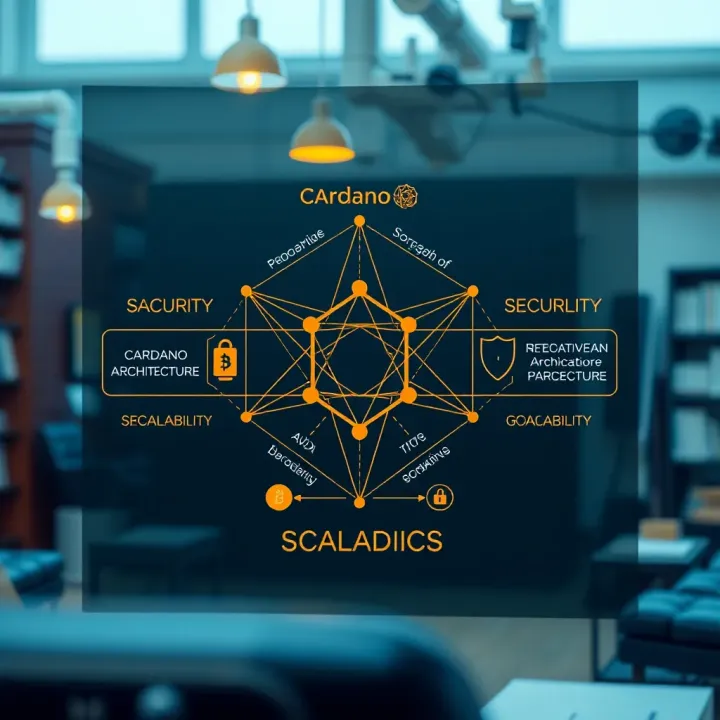
In practice, this means Cardano can process transactions efficiently while maintaining strong security protocols. It uses a proof-of-stake consensus mechanism called Ouroboros, designed to be energy-efficient compared to traditional proof-of-work systems. This appeals to investors mindful of sustainability alongside financial returns.
Cardano’s approach combines academic rigour with pragmatic design, making it uniquely positioned among blockchain networks for long-term growth.
For Indian investors, the growing blockchain interest aligns well with Cardano’s expanding footprint. As regulatory clarity improves and adoption grows in sectors like finance and supply chain, ADA presents a promising vehicle for diversifying portfolios.
Key features include:
Scalability: Cardano aims to handle thousands of transactions per second as its sidechains and Hydra layer mature.
Security: Cryptographic protocols and formal verification reduce vulnerabilities.
Interoperability: Plans support integrating with existing financial systems and other blockchains.
Understanding these fundamentals provides a sound basis to explore ADA’s market behaviour, recent developments, and the potential risks involved. This article will unpack these aspects, offering insights tailored to traders, investors, brokers, and analysts navigating the Indian and global crypto markets.
Starting with a solid introduction to Cardano and its native cryptocurrency, ADA, is essential for anyone looking to understand its position in the blockchain space. This section lays the foundation by explaining what makes Cardano different, so investors and analysts can grasp its design and use cases effectively. For instance, knowing the origin of Cardano helps in appreciating its approach to security and scalability, which is crucial when comparing it to other blockchains.
Cardano was founded by Charles Hoskinson, who is also one of the co-founders of Ethereum. This background adds depth to Cardano's credibility, as the project draws on extensive experience in blockchain development. Launched in 2017 by IOHK (Input Output Hong Kong), Cardano was developed with a research-first approach, involving a team of academics and engineers. Its development continues with peer-reviewed updates, a practice uncommon in many crypto projects but vital for robustness.
This careful and deliberate development process itself appeals to cautious investors who prefer platforms with strong academic backing and structured progress rather than hype-driven models.
Cardano’s design philosophy focuses on balancing security, scalability, and decentralisation. Instead of rushing to launch, the team uses formal methods from computer science, making the platform reliable and transparent. This philosophy means that Cardano isn't just about quick profits; it aims to build a lasting infrastructure that supports smart contracts and Decentralised Finance (DeFi) over the long haul.
For example, separating the settlement layer from the computation layer lets Cardano update features without disrupting transactions, a practical benefit for continuous growth.
ADA acts as the power engine within Cardano’s network. It is used to pay transaction fees, participate in network governance, and stake for network security. For investors or traders, this means ADA's value is closely tied to the network's utility and adoption. Stakeholders who hold and delegate ADA contribute to verifying transactions and earn rewards in return, encouraging active participation in network health.
In India, where digital transactions and blockchain interest are rising, ADA’s role could translate into real-world applications like transparent agricultural supply chains or secure financial services.
Unlike Bitcoin, which mainly serves as digital gold or store of value, or Ethereum, focused heavily on smart contracts, ADA was built with a layered architecture prioritising sustainability and academic rigour. Its consensus mechanism, Ouroboros, uses Proof of Stake (PoS), which consumes far less energy than Proof of Work (PoW), making it eco-friendly—a feature increasingly important for investors concerned about sustainability.
Moreover, Cardano’s development is slower but more methodical, reducing risks associated with bugs or security lapses. This approach could appeal to Indian investors who typically value stability and compliance over speculative quick wins.
In a nutshell, understanding where Cardano and ADA come from and their underlying design gives investors a clearer lens on potential risks and rewards tied to this unique blockchain platform.
Cardano stands apart from many blockchain projects because of its focus on scientific rigour and practical efficiency. Its core features address common blockchain challenges such as energy consumption, scalability, and flexibility, making it an appealing platform for traders, investors, and developers alike.

Unlike Bitcoin's Proof of Work (PoW) that requires massive computational power and electricity to validate transactions, Cardano uses a Proof of Stake (PoS) consensus mechanism called Ouroboros. This method drastically reduces energy usage by allowing validators—called stake pool operators—to be chosen to create blocks based on how much ADA they hold and delegate. For example, running a stake pool in India consumes a fraction of the electricity compared to Bitcoin mining farms, which also has environmental advantages.
PoS helps maintain the blockchain’s security without the high power bills or specialised mining hardware, making it more accessible and sustainable.
Ouroboros divides time into epochs and slots, with each slot assigned a leader who validates new transactions. The protocol's security relies on proven cryptographic principles and careful random selection, ensuring malicious actors cannot easily control the network. Practical benefits include predictable operation and lower chances of forks that can unsettle investors. This design keeps Cardano’s ledger both secure and efficient for real-world applications.
Cardano separates the Settlement Layer (CSL), which handles ADA transactions, from the Computation Layer (CCL), which processes smart contracts and decentralised applications. This split means transaction records remain simple and quick, while complex contract logic doesn't clog the system. For instance, an Indian fintech startup can conduct swift ADA payments without waiting for smart contract batch processing.
This layered design allows each component to evolve independently. Updates to smart contract capabilities or governance models won't disrupt the core payment system. The result: increased scalability and adaptability. This flexibility benefits investors and users who want a blockchain that keeps pace with innovations without network downtime or security risks.
Plutus is Cardano’s smart contract programming platform, using Haskell-based code known for reliability. It allows developers to write robust, verifiable contracts that execute on the Computation Layer. This foundation reduces bugs and vulnerabilities compared to less formal languages. Indian developers can build dApps with confidence that their contracts will work as intended, which is critical in sectors like digital finance or supply chain.
Smart contracts enable automated agreements without intermediaries. On Cardano, this supports use cases such as decentralised finance (DeFi), token issuance, and transparent voting systems. For example, a farmer co-operative in Maharashtra could use these contracts to record produce sales, ensuring timely payments and reducing paperwork. Such practical deployments underline Cardano’s potential beyond cryptocurrency trading alone.
The Indian government has taken cautious yet proactive steps towards blockchain technology, recognising its potential to improve sectors like finance, supply chains, and governance. Initiatives such as the establishment of the Centre for Blockchain Technology (C4BT) under the Ministry of Electronics and Information Technology show a commitment to nurturing blockchain innovation. At the same time, regulatory bodies like the Securities and Exchange Board of India (SEBI) are working on frameworks to manage crypto assets, aiming to protect investors without stifling growth.
Alongside government interest, several regulations are under review, including possible guidelines for cryptocurrencies and stablecoins. This evolving regulatory landscape influences how platforms like Cardano operate in India, impacting investor confidence and adoption by institutions.
In the public and private sectors, adoption of blockchain is gaining traction. Major banks such as State Bank of India and HDFC Bank have explored blockchain for faster KYC (Know Your Customer) processes and to reduce fraud. Private firms in logistics and supply chain management are using blockchain to trace goods more transparently. Cardano, with its focus on security and scalability through proof-of-stake consensus, appeals to these sectors aiming for efficient and reliable systems.
Cardano is building ties within India through strategic partnerships aimed at practical blockchain applications. For instance, collaborations with Indian states or tech firms explore using Cardano’s blockchain for land registry and identity management projects. These efforts not only provide transparency but also help cut down bureaucratic delays, a common concern in governance.
Several projects focus on leveraging Cardano's platform to enhance sectors critical to India’s economy. In agriculture, Cardano-backed initiatives aim to provide farmers with better access to financing and supply chain verification, reducing reliance on middlemen. This could improve transparency in transactions and help ensure farmers get fair prices.
In finance, Cardano’s smart contracts facilitate more accessible and secure lending, insurance, and payments, even for underserved communities. This aligns well with India’s push towards financial inclusion. Governance use cases include voter registration and record keeping that benefit from Cardano’s tamper-proof ledger, promising to increase trust and accountability.
Cardano’s adaptability and partnerships position it as a viable blockchain platform in India, poised to impact finance, agriculture, and governance by aligning with the country’s unique challenges and opportunities.
Government initiatives are driving blockchain awareness and regulatory clarity.
Public and private sectors are exploring blockchain to improve efficiency.
Cardano’s projects in India focus on real-world applications with measurable benefits.
These factors make Cardano a noteworthy player within India’s expanding blockchain ecosystem.
Investing in Cardano’s ADA cryptocurrency has gained traction among Indian investors due to its distinctive technology and growing global relevance. ADA appeals particularly to those looking for alternatives to more volatile assets, providing exposure to a blockchain platform with a strong emphasis on security and sustainability. Understanding how to safely buy and store ADA is essential for Indian investors keen on leveraging this asset.
Several Indian cryptocurrency exchanges support ADA, making it accessible for local investors. Exchanges like WazirX, CoinDCX, and ZebPay list ADA, offering an easy way for traders to buy and sell this cryptocurrency using rupees. These platforms feature user-friendly interfaces and comply with basic security standards, but investors should look for exchanges with strong reputation and transparent policies to minimise risks.
For storing ADA, wallets come into play as critical tools. Hardware wallets such as Ledger Nano S or Ledger Nano X offer enhanced security by keeping private keys offline, making them popular among serious investors. On the other hand, software wallets like Daedalus and Yoroi, which are specifically designed for Cardano, provide convenience with good security for everyday use. Indian investors must always back up their wallet’s seed phrase securely since loss of this information means losing access to funds.
Cryptocurrency markets, including ADA, are known for significant volatility. Price swings of 10-20% within days are not unusual, and sudden shifts can impact investment returns dramatically. This volatility means investors should be prepared for ups and downs and avoid investing money they cannot afford to lose.
Regulatory clarity in India is still evolving and poses a degree of uncertainty for crypto holders. The government has introduced taxation guidelines on cryptocurrencies, but comprehensive regulation is yet to stabilise. This creates potential risks—from unexpected tax changes to stricter rules on exchanges—which investors must track carefully. Choosing exchanges with clear compliance records and staying updated with announcements from regulators like the Securities and Exchange Board of India (SEBI) can help mitigate surprises.
Safety in investment comes not just from choosing the right asset but understanding market behaviour and local regulations fully.
In summary, investing in ADA in India is becoming easier thanks to improved exchange support and wallet options. However, prudent investors should balance enthusiasm with caution, considering price volatility and uncertain regulatory environments while securing their assets effectively.
The future developments around Cardano hold significant interest for investors and blockchain professionals. Understanding upcoming upgrades and Cardano's evolving role in the global blockchain scene helps stakeholders gauge its potential impact and investment worthiness. These changes aim to enhance usability, scalability, and relevance amidst growing competition from other platforms.
Cardano plans key enhancements that could boost scalability and transaction throughput. The Hydra protocol, a layer 2 scaling solution, promises to increase transaction speeds by enabling off-chain transactions without compromising security. This will particularly help high-volume use cases where latency and fees could currently pose issues.
From an Indian perspective, this improved scalability could open doors for applications like microfinance or rural payments where fast, cost-effective transactions are crucial. For investors, these upgrades might support long-term network growth and possibly stabilise the ADA token’s price by attracting more users and developers.
Cardano continues enriching its smart contract platform, the Plutus framework. Plans include introducing more developer-friendly tools and expanding support for different programming languages, making it easier for new projects to build sophisticated decentralised apps (dApps).
This matters because a broader dApp ecosystem drives demand for ADA and enhances the blockchain's value proposition. For finance professionals, the expanded smart contract capability could translate into more reliable decentralized finance (DeFi) projects or even innovative governance models, relevant for emerging sectors in India.
Cardano operates in a fiercely competitive space with platforms like Ethereum, Solana, and Polkadot. While Ethereum leads with a mature ecosystem, Cardano targets security, formal verification, and peer-reviewed research to differentiate. This approach appeals to sectors demanding high assurance—such as government and finance.
For investors and analysts, recognising how Cardano positions itself against rivals can help predict adoption curves, potential partnerships, and technology shifts. It's not just about price but understanding the network’s technical robustness and developer interest.
One of Cardano’s notable goals is boosting financial inclusion worldwide. By providing low-cost, secure transactions and programmable smart contracts, Cardano aims to serve underbanked populations. Projects in Africa showcase the practical impact of this vision.
Considering India’s vast unbanked population and growing digital infrastructure, Cardano’s approach could complement government efforts such as the Unified Payments Interface (UPI) and Digital India initiatives. For finance professionals, this highlights Cardano’s potential beyond speculation—towards real-world solutions with socio-economic benefits.
Staying informed about Cardano’s future developments helps investors and experts align their strategies with a technology that aims to combine security, scalability, and inclusiveness in blockchain.
Explore Quotex PNG 🖼️: Learn what it is, how to use PNG files effectively, overcome common challenges, and maximize your experience with Quotex.

💵 Learn all about real cash withdrawal: safe methods, fees, limits, and tips to manage your money confidently in daily transactions in India.
Explore Rifa FX 📊 with our detailed guide covering concepts, trading strategies, risk tips, and platform insights tailored for Indian traders 🇮🇳.

Explore the EUR/USD OTC live chart 📈 and learn how to read real-time forex data, tools to track movements, and factors shaping this currency pair outside exchanges.
Based on 12 reviews