
Understanding Ethereum and Its Impact on India
Explore how Ethereum fuels India’s blockchain scene 🔗 with decentralised apps & smart contracts, shaping the country’s digital economy and future innovations 🇮🇳.
Edited By
Emily Foster
The DAX Index, shorthand for Deutsche Aktienindex, tracks the performance of the 40 largest and most actively traded companies listed on the Frankfurt Stock Exchange. This index reflects the health of Germany’s blue-chip firms, making it a key indicator not just for the German economy but also for global investors.
Unlike broader indices, the DAX provides a concentrated view of heavyweight players across industries like automotive, pharmaceuticals, technology, and banking. Major firms like Siemens, Volkswagen, and Bayer sit on the index, representing sectors that often influence economic trends worldwide. For Indian investors, understanding the DAX matters because of the increasing integration between global markets and the opportunities to diversify portfolios beyond domestic stocks.
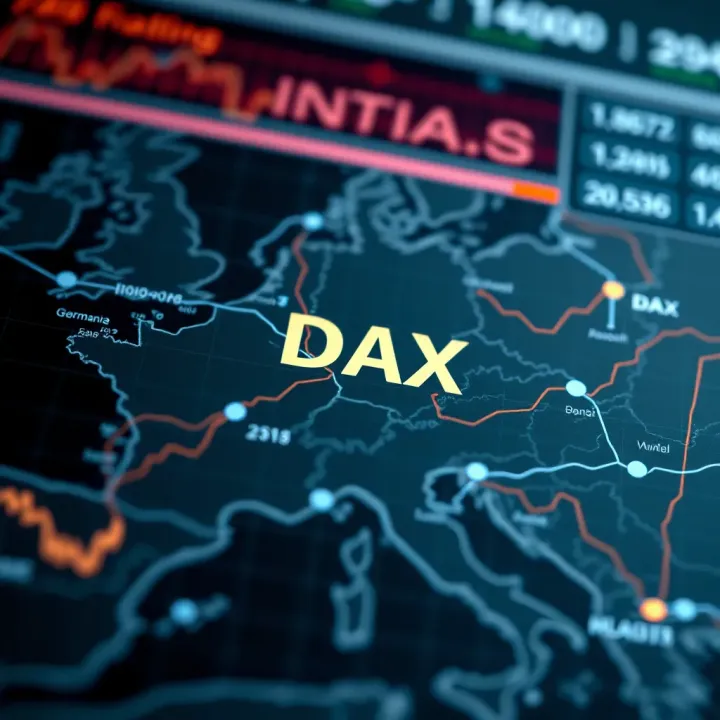
The DAX’s performance can signal shifts in global trade activity and investor sentiment, especially given Germany’s role as Europe’s largest economy.
The index operates on a total return basis, meaning it factors in dividends paid by constituent companies. This setup contrasts with some other international indices that consider only price movements, making the DAX a more comprehensive benchmark for returns.
Key features of the DAX include:
Market capitalization weighting: Firms with larger market value influence the index more.
Continuous review and rebalancing: The list of companies is regularly updated to reflect changes in market liquidity and size.
Sector representation: Covers diverse sectors, providing a broad economic snapshot.
Traders and analysts often observe the DAX to gauge market momentum in Europe and assess risk sentiment, affecting decisions in equity and derivative markets worldwide. For Indian market watchers, the DAX’s trends can offer hints on exports, supply chain dynamics, and multinational Indian companies with ties to German corporations.
In short, the DAX Index offers a vital window into the pulse of Europe's industrial and financial activity. Knowing how it functions and what impacts its swings helps investors make better-informed choices in an interconnected financial world.
The DAX Index is a key indicator for anyone tracking European markets, especially Germany's economic pulse. Understanding its structure, purpose, and selection criteria offers practical benefits to investors and analysts looking to gauge market trends or explore cross-border opportunities. The DAX doesn't just show stock prices—it reflects broader economic health, offering timely insights for portfolio strategies.
The Deutsche Aktienindex (DAX) represents the 40 largest and most liquid German companies traded on the Frankfurt Stock Exchange. It includes well-known firms such as Siemens, Bayer, and Volkswagen, giving a snapshot of Germany's industrial and economic landscape. The DAX functions as a performance index, meaning it accounts for dividends paid by its constituent companies, making it a more comprehensive measure than just price changes.
This index holds great practical relevance because it helps investors understand the health of Germany's biggest industries, ranging from automotive to chemical sectors. For traders and analysts, it's a barometer that influences decisions from Stuttgart to Mumbai. Movements in the DAX often precede shifts in global markets, making it a useful tool for anticipating broader financial trends.
The DAX acts as a mirror reflecting the strength and challenges of Germany's economy. Since Germany leads Europe in industrial output and exports, the index closely follows economic cycles, trade policies, and global demand. For example, during the global slowdown in 2020, the DAX fell sharply, signalling distress in manufacturing and export sectors important to India as well.
For policymakers and economists, DAX movements offer signals about future employment rates, GDP growth, and business confidence. For investors, watching these trends helps align portfolios with economic shifts.
The DAX includes the top 40 companies listed on the Frankfurt Stock Exchange, chosen mainly based on their market value and trading volume. This selection ensures the index stays relevant and liquid, representing firms actively influencing the economy. Notably, company performance and size can affect their inclusion; for instance, if a company’s market cap shrinks significantly or trading drops, it may be replaced by a more active, larger company.
This selection method keeps the index dynamic and reflective of real market conditions, which is essential for investors who track the DAX to spot emerging sectors or companies performing well.
Companies must meet minimum market capitalization thresholds and show sufficient trading liquidity to qualify for the DAX. This prevents small or thinly traded stocks from distorting the index’s representativeness. High liquidity also means investors can enter or exit positions more easily, reducing risks linked to market slowness.
For example, if a company’s free float market cap falls below these limits, it risks being removed from the DAX, which could impact the stock’s demand and valuation. Therefore, these criteria maintain investor confidence in the index as a stable benchmark.
The DAX is more than just a list—it's a carefully curated representative of Germany’s economic giants, offering investors a reliable window into industrial health and market dynamics.
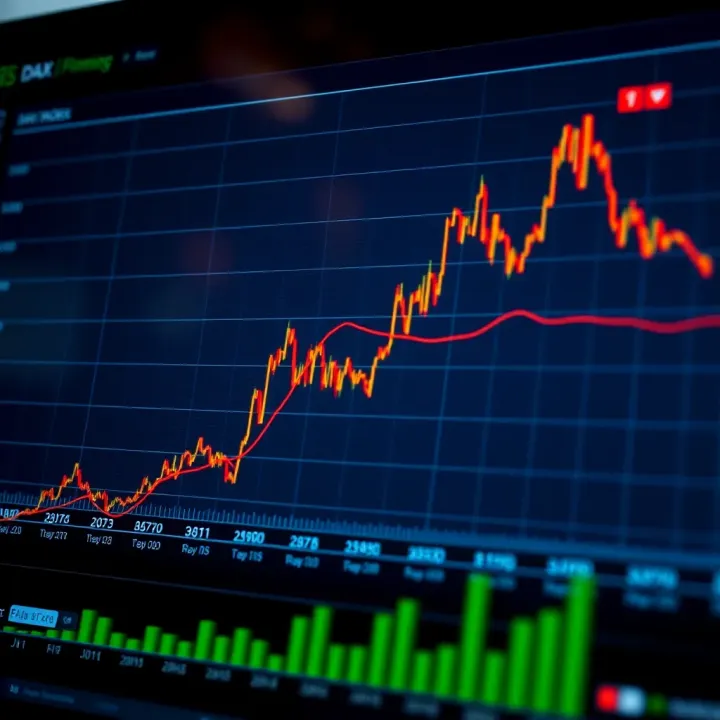
This section sets the foundation to appreciate later discussions on how the DAX interacts with global markets, its analytical methods, and how it influences investment decisions both in Europe and emerging markets like India.
The DAX index holds a significant place amidst global stock indices, often compared with the likes of the US's Dow Jones Industrial Average and the UK's FTSE 100. Unlike the Dow Jones which includes 30 large industrial stocks, the DAX tracks 40 major German companies, reflecting a broader slice of the country's economic landscape. This difference matters because the DAX offers a more diverse representation of sectors from automotive and chemical to financial services.
Movements in the DAX tend to ripple beyond Germany, affecting European markets and sometimes even Asia. For instance, a sharp decline due to geopolitical tensions or policy shifts in Germany can lead to sell-offs in other major markets like France's CAC 40 or Italy's FTSE MIB. Traders following the DAX closely can anticipate such cross-market reactions and adjust their portfolios accordingly.
By tracking the DAX, investors get a pulse on Europe's economic health, making it a valuable gauge for global market sentiment.
Indian investors eyeing global diversification often look to the DAX for specific opportunities. Products like exchange-traded funds (ETFs) and mutual funds tracking the DAX allow Indian retail and institutional investors to gain exposure to Germany's top companies without the complications of direct foreign investments. For example, some mutual fund schemes in India include holdings in DAX-linked assets, providing a convenient investment channel.
Currency movements between the Euro and Indian Rupee can affect returns from DAX-linked investments. When the Euro strengthens against the rupee, Indian investors stand to gain more in INR terms, boosting overall returns even when the index remains flat. Besides currency, close trade ties between India and Germany mean shifts in the DAX can signal upcoming changes in Indian industries that rely on German machinery, automobiles, or chemical products.
Understanding this relationship helps Indian investors and businesses forecast trends, manage risks, and seize opportunities opened by the interconnectedness of these economies.
Analysing the DAX Index requires a blend of technical and fundamental approaches to understand its dynamics better. Technical tools help spot short-term trends and trading signals, while fundamental analysis sheds light on the underlying health of the companies and broader economy. This combination aids investors, traders, and analysts in making informed decisions aligned with market realities.
Common chart patterns and indicators play a critical role in interpreting the price movements of the DAX. Patterns such as head and shoulders, double tops and bottoms, and flag formations often signal potential reversals or trend continuations. For example, spotting a double bottom on the DAX chart might suggest a strong support level and a possible upward bounce, alerting traders to enter long positions. Indicators like Bollinger Bands and MACD (Moving Average Convergence Divergence) further support this by highlighting volatility and momentum shifts.
Use of moving averages and RSI (Relative Strength Index) helps smooth out noise and gauge momentum in the index's price. A popular method is tracking crossovers of short-term and long-term moving averages—like the 50-day and 200-day—which can signal bullish or bearish trends. RSI, on the other hand, indicates overbought or oversold conditions; for instance, an RSI below 30 on the DAX may suggest it is oversold, signalling a chance for price correction. These tools assist traders to time their entry and exit points more precisely.
Evaluating company financials involves scrutinising balance sheets, profit and loss statements, and cash flows of DAX constituent firms. Key metrics like earnings per share (EPS), debt-to-equity ratio, and return on equity (ROE) reveal the companies’ profitability and financial stability. For instance, Bayer AG’s strong cash flow and healthy debt levels can inspire investor confidence, affecting the overall index sentiment.
Understanding macroeconomic factors is equally vital since the DAX reflects Germany’s economic landscape. Factors such as industrial production, export data, inflation rates, and European Central Bank (ECB) policies shape business conditions for DAX companies. During the 2019 US-China trade tensions, for example, slowing exports weighed on several DAX firms, affecting the index performance. Being aware of such factors helps investors anticipate shifts and adjust strategies proactively.
Combining technical and fundamental analysis offers a more complete picture of the DAX’s movement and prospects, helping market participants navigate its complexities with greater confidence.
Studying the historical trends and performance of the DAX index helps investors and analysts understand its resilience, growth potential, and risk factors over time. This insight provides a firmer ground for developing investment strategies tailored to market cycles and economic climates.
Over the past ten years, the DAX has shown a mix of steady growth interrupted by periods of turbulence. From around 9,000 points in 2013, the index crossed the 16,000 mark by early 2021, reflecting the expansion of Germany's leading companies in sectors like automotive, chemicals, and technology. This growth underlines how Germany’s economic strength and export orientation drive the DAX's upward trajectory. For investors, recognising this trend helps identify opportunities in sectors that benefit from global demand and Germany’s manufacturing prowess.
Key events like the European debt crisis (2011-2012), Brexit referendum in 2016, and the COVID-19 pandemic starting 2020 have sharply influenced the DAX. For instance, the pandemic led to a swift drop below 8,000 points in March 2020, followed by a robust recovery supported by stimulus measures. Such events demonstrate the DAX's sensitivity to external shocks, but also its capacity for rebound. Understanding these patterns aids traders and investors in anticipating market reactions to global crises and adjusting their portfolios accordingly.
Geopolitical tensions, especially in Europe, significantly affect the DAX. For example, the Russia-Ukraine conflict from 2022 onwards impacted supply chains, energy prices, and investor confidence, leading to increased market volatility. The DAX’s dependence on industries sensitive to geopolitical risks means investors must keep a close watch on political developments that could disrupt economic stability.
Changes such as rising inflation, interest rate hikes by the European Central Bank, or shifts in US-China trade relations also ripple through the DAX. Inflationary pressures have squeezed profit margins of DAX constituents, causing short-term market corrections, while monetary policy shifts affect liquidity and investment flows. For Indian investors specifically, these global economic shifts can inform timing decisions when looking at derivatives or ETFs linked to the DAX, helping balance risk and returns.
Monitoring the DAX’s historical performance alongside current geopolitical and economic changes provides traders and investors a grounded perspective, allowing better decision-making that aligns with both global trends and local market conditions.
The fluctuations of the DAX index carry significant weight not only for investors but also for the broader economy. Movements in the DAX reflect the health of Germany’s largest firms, providing insights into business cycles and market sentiment that can influence investment decisions. Indian investors, traders, and financial analysts watching global markets find it practical to monitor DAX changes to align their strategies accordingly.
One practical way to gain exposure to the German market without buying individual stocks is through index funds or exchange-traded funds (ETFs) linked to the DAX. For example, Indian investors can look at ETFs listed on Indian exchanges or international platforms that replicate the DAX Index. These funds offer diversification across 40 top German firms and provide a cost-efficient means of investing in Europe’s economic engine.
Such instruments are particularly good for those wanting broad market coverage without the hassle of analysing each constituent company. Additionally, the growing interest in international diversification among Indian portfolios means that DAX-tracking funds are becoming more relevant for long-term wealth planning.
DAX investments come with risks, including currency fluctuations, geopolitical tensions affecting Germany, and sector-specific shocks. Effective risk management involves strategies such as hedging currency exposure through derivative products or balancing exposure between equity and debt instruments.
Indian investors might also consider stop-loss orders or regular portfolio reviews to adjust positions based on DAX trends. Diversifying across geographies alongside the DAX can help mitigate shocks arising purely from European market shifts. Risk approaches tailored to one’s investment horizon and risk appetite are key to handling the inherent volatility in international stock indices.
The DAX index serves as a barometer for Germany’s economic condition. Rising DAX levels usually indicate business optimism, strong corporate earnings, and robust industrial output. Conversely, sharp falls often reflect economic slowdowns or external shocks.
Policy makers, analysts, and investors track the DAX to anticipate changes in Germany’s GDP growth, inflation pressures, and employment trends. For instance, a steady rise in DAX during a quarter may signal expanding exports and industrial production, helping investors make timely decisions.
Germany’s economy is heavily export-oriented, with many DAX companies like Siemens, Volkswagen, and Bayer tied to global supply chains. Therefore, DAX movements closely echo industrial and export performance.
If global demand weakens due to geopolitical tensions or trade disputes, the DAX tends to dip even before official data shows the slowdown. Indian businesses with trade ties to Europe, or investors reliant on industrial sector health, can benefit by observing the DAX as an early warning signal and adjust strategies accordingly.
Tracking the DAX offers practical insights into European economic shifts that can ripple through global markets, including India’s.
Understanding these implications helps investors and economists to navigate decisions amid interconnected global trade and financial systems.
Explore how Ethereum fuels India’s blockchain scene 🔗 with decentralised apps & smart contracts, shaping the country’s digital economy and future innovations 🇮🇳.

Explore Qutex technology in India 🇮🇳: basics, tech details, real-world uses, benefits, challenges, market trends, and its impact on industries and consumers 📈🔧

🔍 Explore Quotex ownership, company structure, and regulatory aspects. Learn how management affects trading security, policies, and user trust. 📊
Explore Qutoex thoroughly! Learn how it works, its key features, tips, and safety aspects for beginners and experts alike. 📊💡
Based on 11 reviews