

Real Money Trading Apps in India: A User Guide
Explore real money trading apps in India with insights on features, safety, legal aspects, payment options, and smart tips for secure, rewarding play 💰📱
Edited By
Jessica Morgan
Choosing the right trading app in India is no simple task. With hundreds of platforms available, each boasting different features and fee structures, you need to zero in on what matches your trading style and goals. Whether you're a newcomer testing the waters or an experienced trader managing large portfolios, the app you pick can impact your success significantly.
Indian investors have steadily moved from traditional brokerage houses to digital apps for their stock market activities. The convenience of trading anytime and anywhere through a smartphone, combined with falling brokerage costs, has reshaped investing habits. Popular apps like Zerodha Kite, Upstox Pro, and Angel One have attracted millions with simple interfaces and fast execution.

When selecting a trading app, focus on multiple key factors: security protocols, regulatory compliance, cost-effectiveness, platform usability, and range of investment options.
Regulatory Oversight: Ensure the app is registered with the Securities and Exchange Board of India (SEBI) and complies with all mandates. This helps safeguard your investments.
Charges and Fees: Look beyond low brokerage; factor in account maintenance fees, call and trade charges, and hidden costs. For example, Zerodha charges zero brokerage on equity delivery but has fees for other services.
Trading Platform and Usability: A laggy or confusing interface can cost you trades. User-friendly apps that offer real-time market data plus charting tools hold an edge.
Range of Instruments: From equities and derivatives to mutual funds and digital gold, a good app provides diverse investment avenues in one place.
Customer Support: Quick resolution of issues via chat, phone, or email is vital, especially during volatile market conditions.
Besides app features, always prioritise security. Use apps that support two-factor authentication, secure data encryption, and offer features like transaction alerts. Fraud attempts around digital payments and stock apps have risen lately, so vigilance is key.
This guide will help you understand what the leading trading apps in India offer, their pros and cons, and which might suit your investing style best. With facts backed by regulatory standards and practical insights, you can make an informed choice to grow your wealth safely and effectively.
Having access to the right trading app can make all the difference in how effectively you manage investments and respond to market changes. India’s digital market offers a range of options tailored for different trading styles and investment goals. This section highlights some of the most popular trading apps for various segments like equity, derivatives, mutual funds, and systematic investment plans (SIPs). Knowing what each app specialises in helps you pick one that fits your preferences and trading needs.
Zerodha Kite: Features and User Experience
Zerodha Kite stands out for its clean, user-friendly interface and minimal downtime during market hours. It offers advanced charting tools with over 100 indicators, which is appreciated by active traders who rely on technical analysis. Its integration with Zerodha’s back-end systems allows fast order execution, which is crucial for derivatives traders needing quick responses. Many users find the mobile app intuitive, with features like market watchlists and easy fund transfers making daily trading smoother.
Upstox Pro: Trading Tools and Costs
Upstox Pro offers a strong combination of low brokerage charges and powerful trading tools. The platform supports multiple order types, including bracket and cover orders, which are useful for risk management in equity and derivatives trading. Upstox also provides real-time data streaming with minimal lag, helping traders make timely decisions. Its cost-effectiveness appeals especially to new traders or those operating with tight budgets.
Angel One: Platform Overview
Angel One provides a well-rounded trading app that caters to both beginners and seasoned investors. Its advantage lies in offering a broad spectrum of services—from equities and derivatives to IPOs and mutual funds—all from a single app. It features detailed research reports and personalised advisory, which benefits investors who prefer some guidance while trading. The app also integrates seamlessly with Angel One’s website, enabling portfolio tracking and analysis.
5Paisa: Low-Cost Trading Benefits
5Paisa has gained traction for its aggressive pricing and simplified trading process. The flat-rate brokerage model is especially attractive to high-frequency traders or those dealing in smaller ticket sizes, allowing them to save substantially on transaction costs. Besides, 5Paisa offers a quick onboarding process, which is a relief for traders who want to start instantly without a lengthy KYC procedure.
Groww: User Interface and Product Range
Groww shines with its straightforward and clean user interface, making mutual fund and SIP investments approachable, especially for first-time investors. It covers thousands of mutual fund schemes, including those from national fund houses, with easy navigation and detailed scheme analysis. Users can track their SIP performance and modify investments directly from the app, which adds to its convenience.
Coin by Zerodha: Fund Management
Coin is tailored specifically for mutual fund investments, offering zero-commission fund purchases which can significantly reduce costs over time. Its deep integration with Zerodha's ecosystem means your equity and mutual fund investments can be managed within a consistent interface. The app also supports direct mutual fund plans, which benefits cost-conscious investors seeking better returns.
Paytm Money: Integration with Payment Services
Paytm Money leverages its popular payment app background to provide seamless mutual fund and SIP investing experiences. Its integration with Paytm’s wallet and banking services means you can fund your investments instantly and track them alongside your other financial activities. This blend appeals to users who prefer managing finance comprehensively from one platform.
When choosing an app, consider your investment style—whether you lean towards day trading, long-term SIPs, or diversification across asset classes. India's trading app market offers specialised tools and pricing models tailored to each, so understanding their unique features can save you both time and money.
Choosing the right trading app is more than just picking the most popular one. Several factors determine which app suits your trading style, investment goals, and comfort level. You want a platform that feels intuitive, costs reasonable fees, offers multiple investment options, and ensures your data and transactions stay secure. Let's explore these key aspects to help you make a balanced choice.

A clean, straightforward interface matters a lot, especially if you trade regularly or are just starting out. You shouldn't struggle to find basic features like placing orders, viewing your portfolio, or checking market news. Apps like Zerodha Kite stand out for their minimalistic design, while Groww attracts users with bright, easy-to-navigate screens suited for mutual fund investing. Remember, a complicated UI can lead to mistakes or missed trading opportunities, so try demo versions or tutorials before committing.
Fees can quietly eat into your profits if you don't watch them closely. Some apps charge a flat fee per trade, others take a percentage of the transaction value, and a few add platform usage charges. For instance, Upstox and 5Paisa offer competitive flat brokerage rates making them popular among frequent traders. If you plan to trade in small volumes often, apps with zero brokerage on equity delivery like Angel One can save you substantial amounts over time.
Different apps serve different needs. If you're interested only in equity shares, a basic app might suffice. But if you want to diversify into derivatives, commodities, or government bonds, check whether the app supports these markets. Paytm Money, for instance, has recently included options for government securities apart from stocks and mutual funds. Broader market access lets you take advantage of various growth avenues without juggling multiple platforms.
Security isn't just about passwords. Look for apps that comply with the Securities and Exchange Board of India (SEBI) guidelines and enforce two-factor authentication, encryption, and regular audits. Due ddiligence helps protect your personal data and funds. Apps like Zerodha, Upstox, and Angel One have invested significantly in this area, gaining user trust. Also, check for features like biometric login and automatic logout during inactivity to reduce risk.
Selecting a trading app needs a balance of usability, cost-effectiveness, available markets, and security. Test drive apps when possible, consider your trading habits, and pick one that fits your workflow while safeguarding your investments.
These factors together form the foundation for selecting a trading app that works for you. Keeping them in mind helps avoid surprises and keeps your trading journey smoother and safer.
Regulatory oversight and robust security protocols form the backbone of trust in trading apps used across India. Users should understand the framework ensuring their investments and data remain safe to transact confidently. In this section, we'll explore the roles of regulatory bodies, security practices in place, and the critical Know Your Customer (KYC) process integral to Indian trading platforms.
The Securities and Exchange Board of India (SEBI) is the primary regulator for Indian stock markets and trading apps. It sets rules that brokers and platforms must comply with to protect investor interests. For example, SEBI mandates that all trading software provide transparency in brokerage fees and maintain fair trade execution standards. Beyond SEBI, the Reserve Bank of India (RBI) oversees payments related to trading activities, ensuring that money transfers follow secure and verified channels.
Regulation also extends to monitoring insider trading and fraud prevention measures. For instance, apps must implement real-time surveillance to detect suspicious trading patterns and report them. Together, these bodies help maintain market integrity, which is crucial since even a slight regulatory lapse can severely impact investor confidence.
Indian trading apps employ multiple security layers to guard user data against breaches and cyber threats. The most common practice includes end-to-end encryption, which secures communications between your device and the broker’s servers. Multi-factor authentication (MFA) adds another barrier by requiring more than a password to log in, such as OTPs sent via SMS or biometric scans.
Additionally, many platforms conduct regular security audits and implement firewalls to ward off hacking attempts. A concrete example is Zerodha implementing device fingerprinting that recognises trusted devices during login, reducing fraudulent access risks. Users can also protect themselves by avoiding public Wi-Fi or an unsecured internet connection while trading.
Remember, security isn’t just on the app side — your own habits greatly affect safety.
Know Your Customer (KYC) is a central regulatory requirement for using trading apps in India. This process verifies your identity to prevent fraudulent accounts and money laundering. Commonly, KYC involves submitting documents such as Aadhaar card, PAN card, and address proof.
Most trading apps now support paperless KYC, using video-based verification or integrated APIs connected to government databases. This method speeds up account activation but does not compromise thorough verification.
Verification also helps in linking your bank account for smooth fund transfers, ensuring money flows only to authorised accounts. Without completing KYC, you won’t be able to trade legally or withdraw funds, underscoring its importance.
In short, regulations and security measures work together to create a trustworthy trading environment. Understanding them not only safeguards your investments but also enhances your trading experience.
Trading apps give investors and traders a powerful platform to manage investments at their fingertips. But using them effectively and safely demands more than just downloading an app. Following certain practical habits can protect your money and even boost your trading efficiency.
Risk management is key to protecting your capital, especially when markets are volatile. Avoid jumping into trades based on rumours or hot tips you find on social media. For instance, a quick surge in stock price may be tempting, but it could be driven by short-term speculation rather than fundamentals. Set clear stop-loss limits on the app to automatically exit trades if prices move against you beyond a threshold. Also, diversify investments rather than putting all your money into a single stock or sector. Many apps like Zerodha Kite or Upstox Pro let you create watchlists and group assets to keep track more effectively.
Most trading apps offer alert functions that notify you when certain price levels or volumes are reached. Setting these alerts can help you react promptly to market movements without staring at your screen all day. For example, if you hold shares in Reliance Industries, an alert at ₹2,500 can signal a good time to review your position. Additionally, apps include inbuilt charts and technical indicators such as moving averages or Relative Strength Index (RSI). Using these tools aids decision-making based on trends rather than guesswork. You can also link customized indicators or third-party research within apps like Angel One to enrich your analysis.
Regular monitoring combined with smart alert settings reduces emotional trading and helps you stick to a disciplined approach.
Order types matter when placing trades. Market orders buy or sell instantly at the current price but can trigger unexpected costs during volatile sessions. Limit orders set your desired entry or exit prices, helping control costs especially on fast-moving stocks like Infosys or Tata Motors. Good-Till-Cancelled (GTC) orders allow your trade to remain active until filled or cancelled, saving repeated manual inputs. Some apps provide features like bracket orders to place target and stop-loss orders simultaneously, adding an automatic safety net. Always double-check order details before submission, since wrongly entered quantities or segment (equity, derivatives) can cause unwanted impact. Practice order placement with paper trading or demo accounts provided by apps if available.
Using these practical tips lets you handle trading apps more confidently and safeguards your investment journey. It is not just about picking the best app but learning how to use it well to avoid pitfalls and optimise chances of profit.
Trading apps in India are evolving rapidly, driven by technological advances and changing investor needs. Understanding future trends helps users stay ahead and pick apps that remain relevant over time. In particular, these trends focus on smarter tools, wider investment options, and better access, contributing to more effective trading and investing.
Artificial intelligence (AI) and machine learning (ML) are already reshaping India’s trading apps. They analyse vast amounts of market data fast, offering personalised trading signals and risk assessments. For example, some apps use AI to provide customised insights based on user behaviour and portfolio patterns, helping traders spot opportunities or avoid losses. Machine learning also powers chatbots that answer queries instantly, improving user support.
This trend benefits traders by enabling smarter decision-making without needing expert knowledge all the time. Apps like Zerodha Kite and Upstox are gradually adding these capabilities, such as AI-driven trend predictions and automated portfolio rebalancing. However, users should still treat AI advice cautiously and not fully rely on it for high-stake decisions.
Investors today want access beyond traditional stocks and mutual funds. Trading apps are responding by broadening investment options to include commodities, government bonds, fractional shares, and international equities. This expansion supports diversified investing under one roof, which is convenient and cost-effective.
Moreover, Application Programming Interfaces (APIs) allow third-party services to plug into trading platforms. This opens up possibilities for advanced charting tools, algorithmic trading, or integrating tax-filing assistance directly within the app. APIs are encouraging a more modular, customisable trading experience tailored to individual needs.
For instance, Groww and Angel One have begun allowing access to fixed deposits and direct equity investments, alongside mutual funds. Future APIs could enable deeper integrations with fintech services like payment wallets or financial planning tools.
India’s growing number of smartphone users in tier-2 and tier-3 cities is reshaping trading app strategies. Developers are prioritising mobile-first designs that work well on average-speed internet and less expensive devices. The goal is to lower entry barriers and enhance usability for new users who may not be seasoned traders.
Apps like Paytm Money and 5Paisa are targeting these markets by simplifying onboarding, offering vernacular language options, and integrating with common payment methods like UPI (Unified Payments Interface). This focus also means boosting app stability during monsoon times or on limited connectivity.
Reaching small-town investors with educational resources and easy-to-use features could significantly increase market participation, creating new growth avenues for trading platforms.
The future of Indian trading apps lies in combining tech innovation with accessibility, offering a smarter, richer, and more inclusive investment journey.
In summary, by adopting AI/ML, widening investment options and APIs, and enhancing mobile-first approaches for smaller cities, trading apps in India are set to become more powerful and user-friendly in the years ahead. Investors choosing apps today should keep these trends in mind to benefit fully from forthcoming enhancements.
Explore real money trading apps in India with insights on features, safety, legal aspects, payment options, and smart tips for secure, rewarding play 💰📱
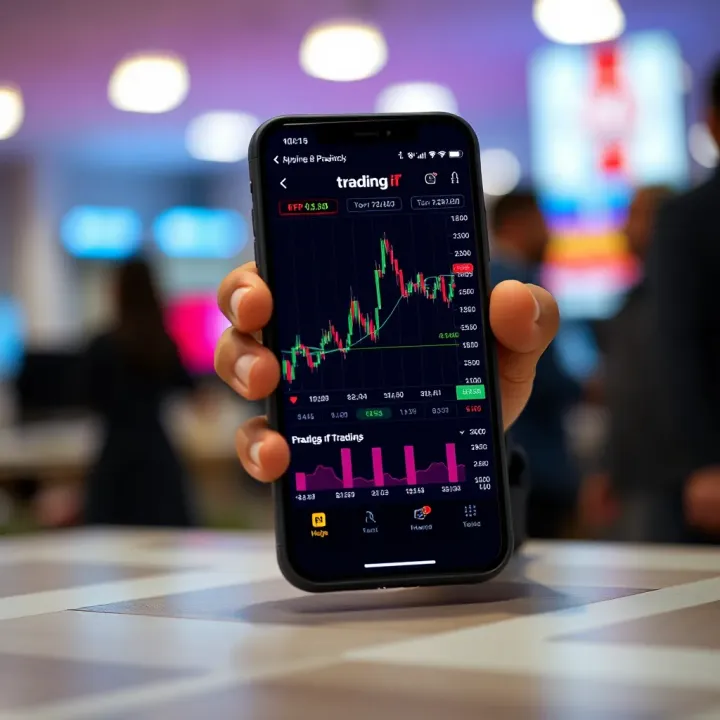
Explore trusted RBI-approved trading apps in India 📱 Learn key features, approval steps, top platforms, and smart tips for secure trading.

📱 Explore RBI-approved forex trading apps! Learn why approval matters, pick reliable platforms, and get tips for safe trading in India. 💹⚠️

🌐 Explore RBI authorized forex trading apps in India! Learn about regulations, app safety, benefits, risks, and tips for choosing the right platform safely.
Based on 12 reviews