

Algorand Price Prediction: Trends and Outlook
Discover Algorand's price trends 📈 and expert analysis, including tech, market factors, risks, and investment tips for Indian and global crypto enthusiasts 🌏.
Edited By
Jessica Morgan
Ethereum (ETH) has emerged as a key player in the cryptocurrency space, standing out not just as a digital currency but as a platform powering decentralised applications. Traders and investors keep a close eye on Ethereum's price movements, given its significant influence on the broader crypto market.
The future price of Ethereum depends on various factors ranging from technological upgrades to regulatory developments. For instance, the recent shift to Ethereum 2.0 and its move towards proof-of-stake consensus protocol aims to improve scalability and reduce energy consumption, which can impact investor confidence and hence price.
Market trends also shape ETH’s value. Increasing adoption of decentralised finance (DeFi) platforms and non-fungible tokens (NFTs) running on Ethereum's blockchain tend to fuel demand for ETH, since it is used as 'gas' for transactions. Conversely, competition from other blockchain platforms with lower fees could slow growth.
Regulatory clarity remains a major factor, especially in India where cryptocurrency regulations are still evolving. Any strict measures or taxation policies can shake investor sentiment and trading volumes. Conversely, clear rules and official recognition may attract institutional money into ETH.
Investor sentiment is another powerful driver. News cycles, market volatility, or endorsements from notable figures influence buying or selling behaviour, often causing short-term price swings.
Understanding these forces can help traders and analysts make better-informed decisions, especially in a market as volatile as cryptocurrency.
This piece will explore these elements with up-to-date examples and expert insights, aiming to help Indian investors follow Ethereum's price trends with greater confidence.
Grasping the basics of Ethereum and its role in the market is essential when discussing its future price. Ethereum isn't just a cryptocurrency; it forms the backbone of numerous decentralised applications, impacting sectors beyond finance. Knowing how Ethereum works and why it matters offers investors and analysts the context needed to assess its price movements effectively.
Ethereum as a blockchain platform
Ethereum is an open-source blockchain platform that allows developers to build and deploy decentralised applications (dApps). Unlike Bitcoin, which primarily functions as digital gold or a store of value, Ethereum’s platform supports smart contracts—self-executing contracts coded on the blockchain. For instance, these smart contracts automatically release payments when certain conditions are met, which cuts down the need for traditional intermediaries like banks. This technology makes Ethereum popular among developers building decentralised finance (DeFi) solutions and non-fungible tokens (NFTs).
The role and function of ETH cryptocurrency
Ether (ETH) is the native token powering Ethereum’s ecosystem. Users pay gas fees in ETH to run applications or process transactions on the Ethereum network. Beyond transaction fees, ETH also acts as an investment asset and a medium of exchange within the ecosystem. For example, DeFi platforms based on Ethereum often require staking ETH for liquidity or governance, linking its demand to platform utilisation. This dual role influences how ETH’s price reacts to changes in network activity and adoption.
Market capitalization and comparison with Bitcoin
Ethereum is the second-largest cryptocurrency by market capitalisation after Bitcoin. While Bitcoin enjoys a reputation as digital gold, Ethereum is often called the digital oil powering global decentralised innovation. As of now, Ethereum’s market cap runs into several lakh crores of rupees, reflecting widespread acceptance by retail and institutional investors. Comparatively, Bitcoin’s market cap remains larger, but Ethereum’s faster transaction speed and broader use cases give it a distinct advantage in attracting developers and projects.
Application of Ethereum in decentralized finance (DeFi) and NFTs
Ethereum’s impact shows strongly in sectors like DeFi and NFTs. DeFi platforms built on Ethereum let users borrow, lend, and trade assets without traditional banks, often at competitive rates and with global access. Applications like Aave and Compound illustrate how Ethereum powers these new financial services. Similarly, NFTs, the unique digital collectibles, mostly operate on Ethereum, with platforms like OpenSea hosting millions of NFT transactions. This real-world usage drives ongoing demand for ETH and influences its price prospects.
Understanding these elements helps investors track how technological progress and market shifts in Ethereum’s ecosystem directly affect ETH’s valuation, making it a vital foundation before discussing price predictions.
Ethereum is a versatile blockchain driving multiple sectors.
ETH’s utility as fuel and asset shapes its demand.
Its market size rivals many major cryptocurrencies.
DeFi and NFTs provide concrete examples of Ethereum’s market relevance.
Ethereum’s future price depends heavily on several major factors shaping its ecosystem, market behaviour, and external environment. Understanding these drivers helps traders, investors, and finance professionals gauge potential price shifts and risks.
The transition to Ethereum 2.0, primarily shifting from proof-of-work (PoW) to proof-of-stake (PoS), is a game-changer for the network. This upgrade drastically reduces energy consumption, addressing sustainability concerns that plague many cryptocurrencies. More importantly, PoS improves transaction speeds while maintaining security, which can boost investor confidence and attract long-term holders. For example, since the Beacon Chain launched, developers have steadily integrated staking mechanisms, allowing users to earn rewards by locking ETH — a feature that reduces circulating supply and may influence price.
Scalability improvements aim to lower gas fees which have been a barrier for widespread use, especially during network congestion. Upgrades like sharding partition data processing and boost throughput without compromising decentralisation. For end-users and developers, this translates to cheaper and faster transactions. Such improvements enhance Ethereum’s appeal for decentralised finance (DeFi) and non-fungible token (NFT) projects, which depend on cost-effective interactions. Reduced fees may drive fresh demand, positively impacting ETH’s price.
Retail and institutional investor demand heavily influences Ethereum’s price swings. In India, growing interest from new crypto investors, aided by exchanges like WazirX and CoinDCX, supports bullish momentum. Simultaneously, major institutional players, including funds and tech companies, actively allocating capital to ETH signal increasing trust and recognition. Their participation often stabilises the market and can push prices higher during bullish phases.
Global economic conditions also shape cryptocurrency popularity. Uncertainty from inflation, geopolitical tensions, or currency depreciation nudges investors towards alternatives like ETH, viewed by some as a hedge. During economic slowdowns, liquidity crunches might dampen appetite for risk assets, leading to temporary declines. Thus, Ethereum’s price tends to correlate with broader macroeconomic trends, making it essential for investors to keep an eye on global financial health alongside crypto-specific developments.
India's regulatory stance remains cautious but evolving. While the government has not banned cryptocurrencies outright, proposals around crypto taxation and compliance signal tighter oversight. This atmosphere creates unpredictability for investors, influencing their willingness to commit funds. However, clarity in regulations, such as recognising crypto assets under GST and formal taxation frameworks, could encourage more participation, potentially pushing prices up due to increased confidence.
On a global scale, regulations in major markets like the US and EU often set precedents. For example, SEC’s stance on ETH as a security or not affects global sentiment. Strict regulations in one region can cause spillover effects, impacting investor behaviour and liquidity worldwide. Conversely, balanced policies promoting innovation while managing risks tend to foster healthier ecosystems, supporting sustained growth in Ethereum’s market value.
Understanding these key factors equips you to make informed decisions and navigate the volatile ETH market with greater confidence.
Technological progress like Ethereum 2.0 cut energy use and transaction costs.
Mixed investor demand propels price volatility.
Regulatory clarity in India and abroad affects market participation.
Keeping track of these elements will offer clear signals about Ethereum's potential price path ahead.
Studying the historical price movements and market trends of Ethereum (ETH) offers valuable insights for traders and investors looking to understand its behaviour over time. Past trends help in identifying how Ethereum reacts to various events, economic shifts, and technological changes. This knowledge aids in developing strategies based on observed patterns rather than mere speculation.
Ethereum has seen major price surges and corrections in recent years, reflecting its evolving role in the crypto space and broader economic conditions. For instance, its price surged from around ₹1,500 in early 2017 to over ₹1,20,000 by early 2018, driven by increased awareness of smart contracts and ICOs (Initial Coin Offerings). However, this was followed by a steep correction, with prices dropping by nearly 85% over the next year. Such sharp movements illustrate the risks and opportunities present in the market.
These fluctuations are directly relevant for investors who need to time entries and exits carefully. Recognising cycles of boom and bust can guide better decisions, whether short-term trading or long-term holding.
When compared to Bitcoin or other major cryptocurrencies, Ethereum tends to exhibit higher volatility. This means its price swings are often more pronounced. While higher volatility can mean greater risk, it also opens chances for larger gains, especially for those who monitor the market actively. For example, during the 2021 rally, Ethereum’s price jumped more than threefold within months, exceeding Bitcoin’s percentage gain. However, the same volatility caused equally steep downturns during market corrections.
Understanding Ethereum’s unique volatility profile helps investors manage risk better and avoid panic selling during inevitable price dips.
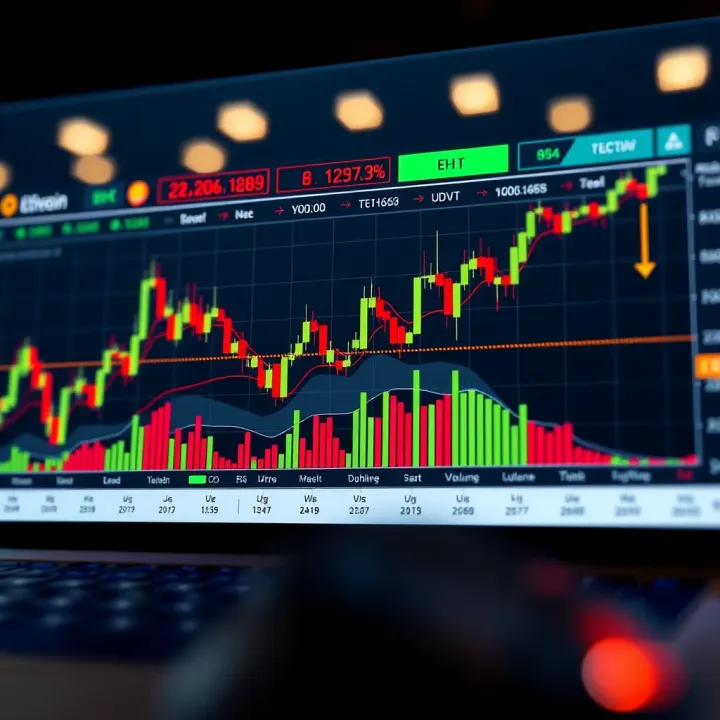
Technical analysts often rely on specific chart patterns and signals to anticipate Ethereum’s price moves. Common patterns include the "head and shoulders" formation, which may indicate an upcoming trend reversal, and "cup and handle" patterns that often signal continuing price increases. These visual tools are practical because they distil complex market behaviour into recognizable shapes, allowing traders to make informed calls based on historical tendencies.
Besides patterns, indicators like the Relative Strength Index (RSI) and Moving Averages help gauge momentum and potential overbought or oversold conditions. For instance, RSI readings above 70 suggest an asset is overbought, possibly hinting at a price pullback.
Technical factors wield influence over both short and long term prices. In the short run, sudden changes in volume or breakout from a resistance level can trigger swift price moves. Over longer periods, trends identified by moving averages can confirm whether Ethereum is in a bullish or bearish phase. This dual perspective is crucial for traders aiming to capitalise on immediate opportunities while aligning with broader market direction.
Grasping these technical indicators equips investors with tools to navigate Ethereum’s price fluctuations systematically rather than relying on guesswork.
In summary, examining Ethereum’s historical trends and applying technical analysis provides a foundation for understanding its price dynamics. This approach benefits traders and investors eager to make well-informed decisions in a market known for its rapid changes and opportunities.
Expert predictions and price forecasts provide valuable insights, especially in a market as dynamic as Ethereum. Given its price volatility and the numerous factors influencing it, investors and traders often look towards expert analyses to gauge future movements. These forecasts are rooted in thorough examination of present market conditions, technological developments, and global economic cues, helping market participants make informed decisions rather than relying on mere speculation.
Analyses based on current market conditions focus on real-time data such as trading volumes, market sentiment, and recent price action. For instance, if Ethereum sees increased buying activity on prominent Indian exchanges like WazirX or CoinDCX, it could indicate bullish momentum. Conversely, a sudden drop in volumes combined with negative news might suggest a short-term correction. Such analyses incorporate on-chain metrics and broader macroeconomic factors, giving traders clues about possible price ranges in the next few weeks or months.
Potential catalysts for price changes in the coming months include network upgrades, regulatory announcements, and market sentiment shifts. The ongoing transition to Ethereum 2.0 and any delays or successes in its rollout could strongly influence prices. Also, if Indian regulators clarify cryptocurrency rules, it might either spur investor confidence or cause apprehension—both impacting price dramatically. Global events, like changes in US Federal Reserve policies or major wallet hacks, could also trigger sudden swings.
Expected adoption trends and technological evolution play a critical role in shaping Ethereum's future value. The rise of decentralised finance (DeFi) and non-fungible tokens (NFTs) continues to expand Ethereum’s real-world utility. As more sectors adopt smart contracts on its platform, demand for ETH could steadily increase. Moreover, Ethereum 2.0 promises to enhance scalability and reduce transaction costs, which may attract larger institutional investments and boost its overall market capitalisation in the long run.
Risks that could impact Ethereum's future value involve regulatory hurdles, technological glitches, and competition from other blockchains. For example, sudden regulatory crackdowns, especially in major markets like India or the US, could restrict trading or increase compliance costs. Technical vulnerabilities or delays in the Ethereum 2.0 roadmap may hurt investor confidence. Additionally, competing networks such as Solana or Cardano offering faster or cheaper solutions could divert attention and capital away from Ethereum.
Keeping an eye on both expert forecasts and real-time developments helps investors balance opportunities and risks, particularly when dealing with an asset as lively as Ethereum.
Overall, forecasts should assist Indian investors in forming realistic expectations and strategies, rather than serving as guaranteed predictions. Understanding the interplay of short-term triggers and long-term shifts is key to navigating Ethereum's price journey effectively.
Indian investors looking to add Ethereum (ETH) to their portfolio should understand both the opportunities and the risks specific to their market environment. Ethereum offers growth potential through its leading role in decentralized finance (DeFi) and non-fungible tokens (NFTs), but Indian regulators’ stance and market infrastructure play a significant role in shaping investment outcomes.
India has several popular cryptocurrency exchanges where investors can buy Ethereum with INR, including WazirX, CoinDCX, and ZebPay. These platforms support easy bank transfers and UPI payments, making them accessible even to freshers in crypto trading. Choosing a reputable exchange is crucial because it ensures better liquidity, transparent pricing, and quicker trade execution.
Once you purchase ETH, storing it safely is equally important. Many investors start with exchange wallets for convenience, but for better security, hardware wallets like Ledger Nano S or wallets such as MetaMask provide greater control by storing private keys offline or in encrypted apps. By using these wallets, you reduce the risk of losing assets due to hacking or exchange insolvency.
Ethereum’s price can swing dramatically within short periods, so managing volatility is key. One effective strategy is to invest systematically through monthly SIPs (Systematic Investment Plans) rather than lump-sum purchases. This smooths out entry points during market ups and downs. Additionally, balancing a crypto portfolio with other asset classes or stablecoins can help reduce exposure to sharp price movements.
Indian investors must stay updated on the regulatory environment. The government's evolving policies, such as tax norms on crypto gains and RBI’s views on cryptocurrencies, can impact liquidity and market confidence. Regularly checking announcements from SEBI and the Ministry of Finance lets you adapt your investments early, avoiding surprises and ensuring compliance.
Staying informed and cautious can turn Ethereum investment from a risky gamble into a calculated opportunity for wealth growth in the Indian market.
By focusing on reliable platforms, securing holdings properly, managing price swings wisely, and tracking legal changes, Indian investors can better position themselves to benefit from Ethereum’s growth while safeguarding their capital.
Discover Algorand's price trends 📈 and expert analysis, including tech, market factors, risks, and investment tips for Indian and global crypto enthusiasts 🌏.
Explore Ethereum's target price influences, market trends, expert predictions, risks & tips to navigate crypto investment confidently in India 🇮🇳📈🔍
📈 Discover Ripple XRP price trends, expert views, market risks, and how global events might impact its future value. A must-read for Indian investors!
📈 Get detailed ETH to USDT price prediction with market trends, technical analysis & expert views. Essential insights for Indian investors eyeing crypto opportunities. 🔍
Based on 15 reviews