
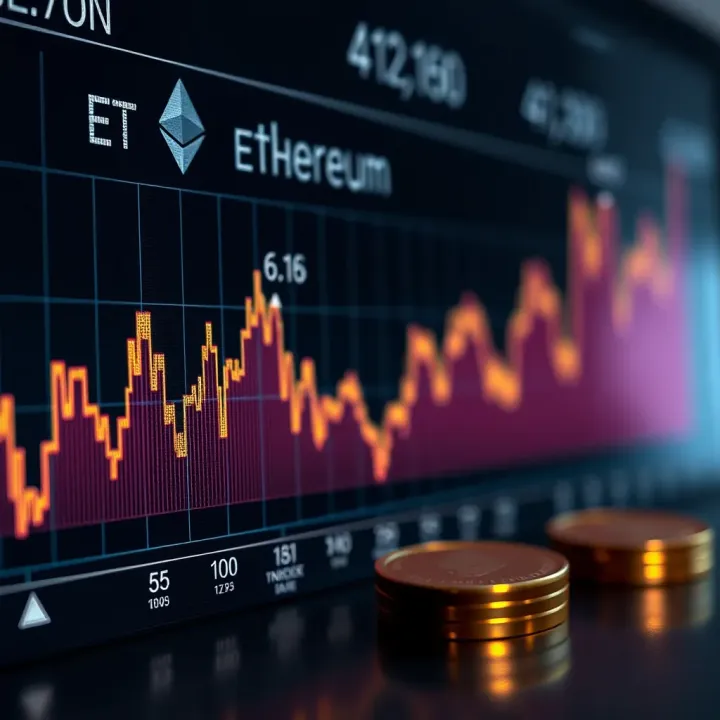
Ethereum (ETH) Price Outlook and Trends
Ethereum (ETH) price trends analysed with focus on tech updates, market shifts, regulations, plus expert views to guide Indian investors 📈₹
Edited By
Edward Foster
Ethereum stands as one of the most influential platforms in the blockchain space, powering a vast ecosystem beyond just cryptocurrencies. Over recent years, it has transformed from a simple smart contract platform to the foundation for decentralised finance (DeFi), non-fungible tokens (NFTs), and a wide range of decentralised applications (dApps).
In 2024, Ethereum faces a dynamic mix of opportunities and obstacles. The recent upgrades, especially the transition to Ethereum 2.0 with its proof-of-stake consensus, aim to tackle issues like high transaction fees and scalability limits. These improvements could significantly lower costs and speed up the network, making Ethereum more competitive with emerging alternatives.

However, Ethereum's future outlook depends on multiple factors: the pace of technological adoption, regulatory reactions in different markets including India's evolving stance on crypto, and competition from other blockchains offering faster or cheaper solutions. Additionally, macroeconomic conditions, crypto market sentiment, and investor appetite continually influence Ethereum's price behaviour.
Understanding these trends and factors is key for investors, traders, and developers who want to position themselves well in a fast-evolving crypto landscape.
Key points shaping Ethereum’s path forward include:
Network Upgrades: Continued rollout of shard chains and layer-2 scaling technologies will impact performance and user experience.
Regulatory Environment: Policies from Indian authorities and global regulators can affect adoption rates and institutional participation.
Market Sentiment: Ethereum often mirrors wider crypto market trends and responds to investor risk appetite, liquidity, and macroeconomic shifts.
Use Cases Expansion: Growth of DeFi, NFTs, and enterprise blockchain applications can drive demand for Ethereum’s native asset, ETH.
This article will explore these elements in detail, offering a practical forecast that helps stakeholders navigate Ethereum's evolving market. By focusing on accurate, timely insights, we aim to cut through hype and present a realistic view of what lies ahead.
Understanding the current state of Ethereum and its market trends sets the foundation for assessing its future potential. This section highlights recent price behaviour and Ethereum's standing in the broader cryptocurrency ecosystem, both vital for traders and investors to make informed decisions.
Ethereum has shown significant price swings over the past year, reflecting its sensitivity to market sentiment and macroeconomic factors. After reaching an all-time high near ₹3,20,000 in November 2021, ETH dropped substantially during the market correction of 2022, falling below ₹1,20,000 by June 2022. This volatility illustrates how external events such as inflation fears and regulatory news influence investor behaviour.
Market capitalisation is another key indicator. Ethereum remains the second-largest cryptocurrency after Bitcoin by market cap, currently hovering around ₹25 lakh crore. This sizeable market cap signals strong investor trust and liquidity, essential for large-scale trading. However, its share has faced pressure from emerging blockchains focusing on faster transactions and lower fees.
Keeping track of Ethereum’s price trends and market cap helps investors understand entry and exit points and evaluate potential risks.
Ethereum stands out due to its smart contract functionality, which powers decentralised applications (dApps) and decentralised finance (DeFi) projects. Unlike Bitcoin, primarily a store of value, Ethereum acts as a platform for innovation with thousands of active projects built on it. For example, platforms like Uniswap and Aave rely heavily on Ethereum’s network to enable peer-to-peer trading and lending.
Moreover, Ethereum’s shift towards Ethereum 2.0, employing Proof of Stake, has marked it as a leader in sustainability efforts among cryptocurrencies. This transition is crucial amid growing concerns over the environmental impact of blockchain mining.
While competition from newer blockchains like Solana and Polkadot challenges Ethereum, its vast developer community and robust infrastructure provide an edge that newcomers find tough to match. This ecosystem depth creates an enduring moat, making Ethereum indispensable to the crypto space.
Together, these facets of price movements and ecosystem role clarify why Ethereum remains central to crypto portfolios and strategic planning for traders and finance professionals.
Understanding the factors shaping Ethereum’s future is critical for investors and analysts aiming to navigate its evolving landscape. These elements directly influence Ethereum’s potential to grow, adapt, and maintain its place as a leading blockchain platform. Focusing on technological upgrades and regulatory changes offers practical insights about how Ethereum might perform amid shifting market and policy conditions.
The launch of Ethereum 2.0, notably its shift from Proof of Work (PoW) to Proof of Stake (PoS), marks a significant milestone. This transition reduces energy consumption drastically, addressing environmental concerns which investors increasingly consider. PoS also improves network security and incentivises more users to participate as validators, thus decentralising the ecosystem further. These changes enhance Ethereum’s appeal both as a sustainable platform and a long-term investment.
Scalability remains a bottleneck for blockchain adoption, and Ethereum addresses this through Layer 2 solutions like Optimistic Rollups and zk-Rollups. These reduce congestion and transaction fees by processing transactions off the main Ethereum chain, yet rely on the security of the mainnet. This approach enables faster, cheaper transactions without compromising security, supporting high-traffic applications such as DeFi and NFTs. For example, platforms like Polygon have capitalised on these solutions to offer smoother user experiences, adding to Ethereum’s overall utility.
Regulatory clarity is shaping how Ethereum is perceived and adopted globally. In India, regulators are mulling over cryptocurrency policies that balance innovation with consumer protection. Although a comprehensive framework awaits finalisation, the Reserve Bank of India (RBI) and Securities and Exchange Board of India (SEBI) emphasise caution regarding risks such as fraud and money laundering. Globally, countries with clear cryptocurrency laws tend to attract more institutional investors, while those with restrictive policies see slower adoption.
These regulations impact investor confidence significantly. Transparent rules reduce uncertainty, encouraging long-term participation. Conversely, unclear or harsh regulations may drive investors towards alternative options or unregulated platforms. For instance, when the US Securities and Exchange Commission (SEC) announces enforcement actions, Ethereum’s price often reacts swiftly. Therefore, staying abreast of regulatory updates is crucial for managing risks and seizing opportunities in Ethereum investment.
Network improvements combined with regulatory developments will largely determine Ethereum’s trajectory over the next few years. Keeping these factors in focus helps investors make well-informed decisions amid the crypto market’s inherent volatility.
Ethereum 2.0 introduces energy-efficient and secure consensus via Proof of Stake
Layer 2 solutions ease congestion and reduce transaction costs
India’s regulatory stance evolves steadily, emphasising consumer protection
Regulatory clarity worldwide affects investor confidence and adoption rates
This balanced view of technological progress and regulatory shifts reveals Ethereum’s dynamic future and holds practical lessons for traders, analysts, and finance professionals alike.
Investment outlook and price predictions play a crucial role for those tracking Ethereum’s future. Traders, analysts, and investors rely on forecasts to inform buying or selling decisions, manage risk, and anticipate market shifts. In the crypto world, where prices swing sharply, practical insights from forecasts provide a clearer picture amid uncertainty.
Financial experts and market analysts continuously assess Ethereum’s price trajectory based on network developments, adoption trends, and broader economic factors. For instance, post Ethereum's shift to Proof of Stake (Ethereum 2.0), several experts projected an increase in energy efficiency and network security, which could support higher valuation over time. However, opinions vary; some expect Ethereum to face short-term headwinds due to market cycles, while others see robust long-term growth tied to DeFi and NFTs.
Analyst reports often include detailed models considering on-chain activity, transaction volumes, and comparison with other cryptocurrencies. Such forecasts help investors calibrate their portfolios — for example, deciding on entry points at dips or when to book profits during rallies.
Market Volatility and External Influences: Ethereum's price remains subject to sharp fluctuations caused by global events, macroeconomic changes, and even sentiment shifts among retail investors. Events like regulatory announcements in India or the US can trigger sudden price drops or spikes. For example, volatility increased markedly after RBI's comments on digital currencies, impacting investor confidence. Traders need to watch these external factors closely while maintaining flexible strategies to withstand fast-moving markets.
Competition from Other Blockchains: Ethereum faces stiff competition from blockchains such as Solana, Binance Smart Chain, and Polygon. These platforms often compete on speed, transaction costs, and scalability. While Ethereum leads in smart contract usage, alternatives offering cheaper and faster transactions could attract projects and users away, potentially slowing Ethereum’s growth. Investors should consider how network upgrades, like Ethereum’s layer 2 solutions, will maintain its relevance amid this competition.
Ethereum's price outlook depends not only on internal tech upgrades but also on managing external risks and competitor challenges effectively.
Understanding these dynamics provides investors and analysts with a grounded view of potential returns and pitfalls, enabling better decision-making in a volatile crypto environment.
Ethereum’s expanding list of use cases plays a major role in driving demand across various sectors. Its adaptability enables a wide variety of applications beyond simple transactions, firming up its place in the crypto ecosystem. As blockchain use grows, understanding these use cases offers a clearer picture of Ethereum’s future outlook.
DeFi on Ethereum lets users borrow, lend, trade, and earn interest without banks or traditional financial intermediaries. Platforms like Aave and Compound allow anyone with internet access to participate in financial services, often at lower cost and with more transparency than banks. This has opened up access for investors, especially in places where banking infrastructure is weak. For example, Indian retail investors engaging in DeFi get exposure to yield farming and lending protocols that offer returns outside conventional fixed deposits. Despite the risks of smart contract bugs or regulatory uncertainty, DeFi’s rapid growth continues to pull new users and capital into Ethereum’s network.
Ethereum remains the backbone for most NFTs, which represent ownership of unique digital items like art, music, or collectibles. Platforms such as OpenSea or Rarible have popularised NFT trading, attracting artists and investors worldwide. This trend has brought new users to Ethereum who may hold or trade ETH to interact with NFTs. Beyond art, NFTs are gaining ground in gaming, providing true ownership of digital assets. India's growing NFT creators and collectors have contributed to a vibrant market supported by Ethereum’s smart contracts. While market hype can lead to volatility, NFTs continue to showcase Ethereum’s ability to host diverse digital assets.
Businesses use Ethereum’s smart contracts for automating agreements and reducing reliance on paper. Large enterprises in India and globally are exploring Ethereum for supply chain tracking, insurance claims, and royalty distribution. Companies like Infosys and Tata Consultancy Services offer blockchain solutions built on Ethereum, signalling rising enterprise interest. Smart contracts reduce processing times and errors, delivering cost savings and transparency. For instance, in real estate, Ethereum smart contracts can automate sale agreements with pre-set conditions, speeding up deals and cutting legal fees. Increasing enterprise adoption bodes well for Ethereum’s utility and long-term value.
Ethereum’s demand is propelled by practical applications that solve real-world problems, not just speculative interest. DeFi, NFTs, and enterprise use together build a diversified foundation supporting Ethereum’s sustained relevance.
In sum, these use cases reveal why Ethereum remains central to blockchain innovation and market activity. Investors and traders tracking Ethereum’s outlook need to factor in how these growing applications influence price and network effects over time.
India’s interest in Ethereum and blockchain technology is growing steadily, especially with increased adoption in sectors like finance, supply chain, and gaming. Preparing for the future of Ethereum means adopting well-thought-out strategies tailored to India’s evolving regulatory landscape and the global market dynamics. For investors and professionals here, understanding Ethereum’s potential and risks can help capitalise on its opportunities effectively.
Investors should focus on a balanced approach that combines long-term holding with selective exposure to short-term volatility. Considering Ethereum’s role as the backbone of many DeFi and NFT platforms, diversifying across applications built on Ethereum can reduce risk. For example, some traders invest in tokens powering specific DeFi projects or Layer 2 solutions, alongside holding ETH itself.
Risk management is critical given cryptocurrency’s inherent unpredictability. Stop-loss orders, position sizing, and regular portfolio reviews can help mitigate losses during market dips. It’s wise to stay updated on regulatory announcements, both in India and abroad, as policies around cryptocurrencies—including taxation rules issued by the Income Tax Department—can impact market sentiment.
The crypto space moves fast, and missing out on crucial updates can cost dearly. Beyond price charts, investors and analysts should track Ethereum network upgrades, partnerships with enterprises, and adoption rates. Resources such as SEBI publications (for regulation) and reports from exchanges like WazirX or CoinDCX offer useful insights specific to the Indian market.
Engaging with communities on Telegram, Discord, and Twitter, especially those led by Indian crypto experts, helps in catching nuanced market shifts early. Plus, watching for global trends—such as Ethereum’s move towards sharding or potential competition from new blockchains—allows for better anticipation of price and adoption changes.
Staying proactive with investment and learning can significantly improve your preparedness for Ethereum’s future, especially as shifts in technology and regulations continue to reshape its landscape.
In summary, preparing for Ethereum’s future in India involves a clear investment strategy coupled with vigilant monitoring of technological and regulatory changes. Those who adapt better to this dynamic environment stand a better chance of riding Ethereum’s waves profitably.
Ethereum (ETH) price trends analysed with focus on tech updates, market shifts, regulations, plus expert views to guide Indian investors 📈₹

📈Explore Dash price prediction with insights on its history, technology, key market factors & expert views, helping Indian investors grasp future prospects clearly.
📈 Discover Ripple XRP price trends, expert views, market risks, and how global events might impact its future value. A must-read for Indian investors!

Explore Ethereum (ETH) price trends, market factors, and expert insights helping Indian investors navigate risks and growth potential in digital currency 🪙📈
Based on 5 reviews