
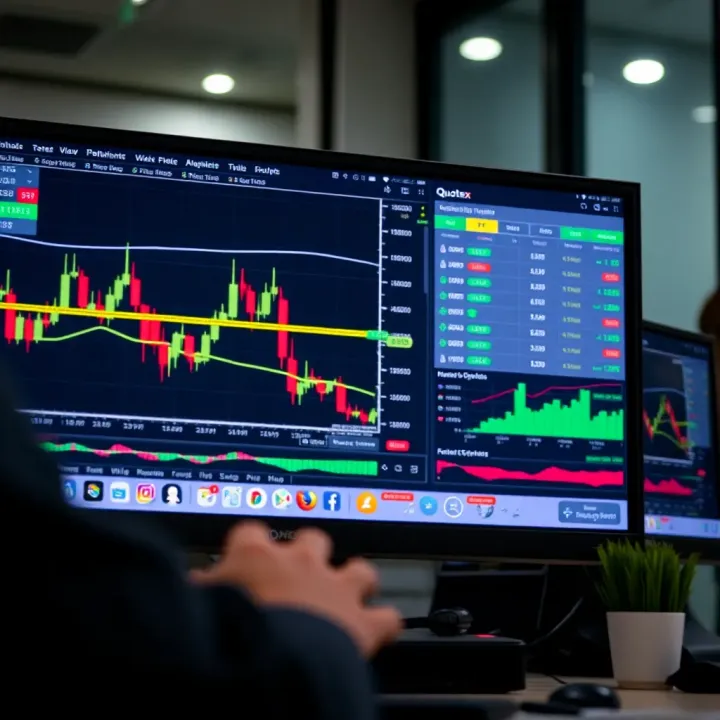
Quotex Forex Trading: A Complete Guide
Explore Quotex forex trading: key features, how to start, trading options, risk tips, pros & cons, plus how it stacks up against others 🚀💹
Edited By
Harry Mitchell
A forex demo account is a simulated trading platform where you can practise currency trading without risking your own money. In other words, it lets you experience the real forex market environment using virtual funds. For Indian traders just starting out or even seasoned ones testing new strategies, this risk-free setup is invaluable.
By using a demo account, you get hands-on familiarity with currency pairs, price movements, and the trading platform itself. For instance, you could simulate buying the USD/INR pair during peak trading hours, see how leverage affects your positions, or explore different order types such as limit and stop-loss without any financial exposure.
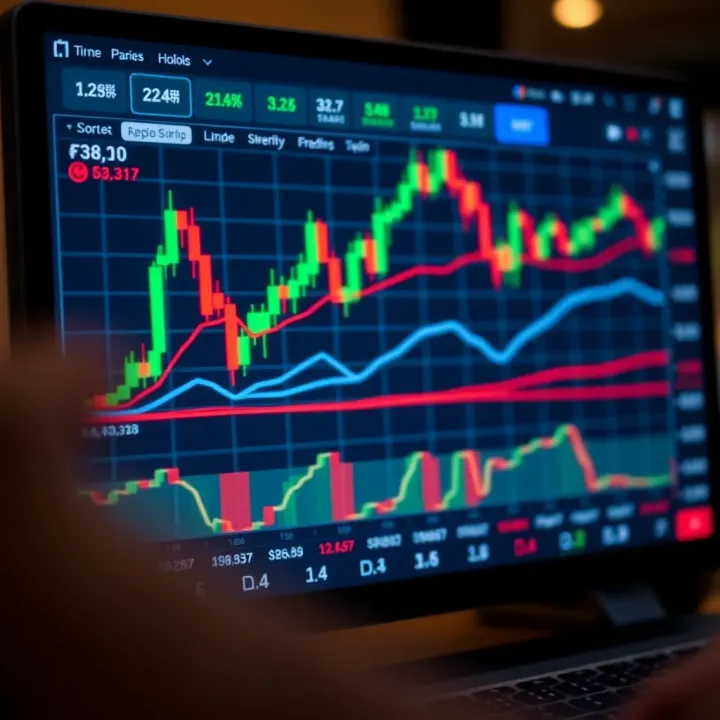
Practising with a demo account helps build confidence and trading discipline before moving to live markets.
Many brokers catering to Indian clients, including Zerodha and ICICI Direct, offer demo accounts with realistic market conditions. This makes transitioning to live trading smoother and more informed. It also helps you understand how Indian Rupee pairs behave compared to major currencies like the US Dollar or Euro.
Here are some key advantages of using a forex demo account:
Practice trading strategies in real-time market conditions
Learn to navigate complex trading platforms without pressure
Test your reaction to market volatility and news events
Understand margin requirements and risk management
Avoid costly beginner mistakes by simulating trades
To open a demo account, you typically provide basic details like your name, email, and phone number. No deposit is needed. After registration, a virtual balance (often ₹10,00,000 or $10,000 equivalent) is credited instantly for practice.
Choosing a demo account aligned with your preferred trading platform is crucial. Some popular platforms in India include MetaTrader 4 and 5, NinjaTrader, and broker-specific web apps. Each presents its own tools, charting styles, and execution speeds.
Understanding what a forex demo account is and how it can aid your trading journey is the first step towards risk-free skill-building in forex markets.
A forex demo account is a practice trading platform offered by brokers that allows traders to buy and sell currencies using virtual money. It replicates real market conditions closely, so you get to understand trading without risking your hard-earned cash. For Indian traders, this means you can get a feel for forex markets, analysing how currency pairs like USD/INR or EUR/USD move, without facing the pressure of losing money.
Demo accounts typically come preloaded with virtual funds, often ranging from ₹1 lakh to ₹10 lakh in equivalent currency, to simulate a realistic trading balance. You get access to live quotes, charts with technical indicators, order entry options, and even risk management tools like stop-loss and take-profit orders. The interface mirrors the broker’s live platform, whether it’s MetaTrader 4, MetaTrader 5, or a proprietary app, helping you learn navigation before switching to real trades.
Traders use demo accounts primarily to build confidence and test strategies. Suppose you’ve read about a new trading technique, like swing trading or scalping; you can try it out risk-free here. Indian traders can also familiarise themselves with the volatility specific to currency pairs involving the rupee, which reacts strongly to economic data releases like RBI policy announcements or GDP numbers. Besides testing strategies, demo accounts allow trading practice at different times to understand how the market behaves during Indian and global sessions.
While demo accounts offer a safe space to learn, the emotional aspect you face in live trading is missing. Real money stakes influence decisions, often causing hesitation or greed. Secondly, the spreads and execution speed on demo platforms may sometimes be more favourable than in live markets, especially during volatile conditions. For instance, during events like budget announcements, slippage in live trades could widen spreads beyond demo conditions. Also, margin calls and leverage in live trading come with stricter monitoring by brokers compared to demo accounts.
Remember, a demo account prepares you technically but transitioning to live trading requires mental readiness and ongoing discipline.
Understanding these points lays a strong foundation to make the most of your demo practice and switch confidently to the real forex market.
Forex demo accounts offer Indian traders a risk-free environment to learn and experiment with currency trading. This tool simulates real trading without the fear of losing actual money, making it invaluable for both beginners and seasoned traders wanting to sharpen their skills.
The main advantage of a demo account is that it lets you trade forex without putting your capital on the line. Suppose a newcomer in Delhi wants to understand how the rupee-dollar pair moves during global events; they can practice on the demo platform without worrying about losing money. This hands-on exposure builds confidence and understanding before entering India’s live forex markets, which are regulated by the Reserve Bank of India (RBI).
Demo accounts are also perfect for trial runs of new trading tactics. Consider a Mumbai-based trader who reads about a moving average crossover strategy in a trading forum. Before risking ₹1 lakh, they can apply this strategy in the demo setup to see its effectiveness without financial consequences. If the strategy fails, no real money is lost, and they can tweak the approach or try something different. This safety net encourages innovation and learning.
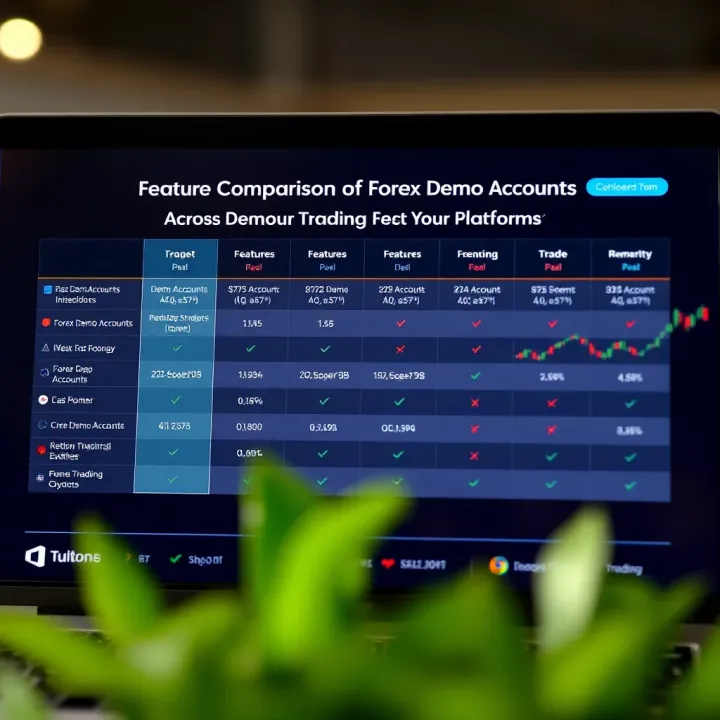
Finally, demo accounts help Indian traders get comfortable with the software their broker offers. Platforms like MetaTrader 4, MetaTrader 5, or broker-specific apps can seem overwhelming initially. For example, a fresher in Chennai can explore order types, charting tools, and risk management features using the demo account. This exposure reduces mistakes when moving to live trading, slashing the chances of costly errors.
Using a demo account is like practising on a flight simulator before piloting a real plane — you learn controls, handle unexpected situations, and build your skills without real-world risk.
In short, forex demo accounts provide a safe playground for Indian traders to learn the ropes, test ideas, and master trading platforms, all without risking ₹1. This helps build the foundation needed for more confident and controlled forex trading in real markets.
Opening a forex demo account is the first practical step if you want to understand currency trading without risking your own money. This section guides you through choosing the right broker, the registration process, and how to set your account for the best learning experience. Getting these basics right helps you build confidence before moving to live trading.
Selecting a trustworthy forex broker is essential for a useful demo account experience. Check whether the broker is regulated by recognised authorities like the Securities and Exchange Board of India (SEBI) or international bodies such as the Financial Conduct Authority (FCA). A regulated broker ensures fair play, transparent pricing, and secured personal data.
Look for brokers offering easy-to-use platforms with demo accounts that mimic live markets closely. Popular brokers like ICICI Direct, Zerodha (with partnerships), or international ones like IG Markets provide demo accounts with realistic spreads and execution speeds. Also, check if the broker offers support in Indian languages and convenient deposit methods, even though you won't be depositing for a demo.
Registering for a demo account generally involves these steps:
Visit the broker's official website and locate the demo account registration page.
Fill in your details such as name, email, mobile number, and country. Providing accurate information helps if you choose to upgrade later to a live account.
Create a secure password and accept the terms and conditions. Avoid simple passwords to protect your data.
Verify your email or mobile through the OTP (one-time password) sent by the broker.
Download or access the trading platform, which could be a web app, desktop app, or mobile app.
The registration itself is free and quick, often completed within a few minutes.
Once your demo account is ready, configure it to resemble your planned live trading setup:
Select your base currency: For Indian traders, INR is often preferred though many brokers offer USD, EUR, or GBP as options.
Set the initial virtual balance: Demo accounts typically allow you to choose your starting capital, ranging from ₹1,00,000 to ₹10 lakh. Pick an amount realistic to what you'd invest live to experience genuine risk management.
Choose leverage and margin settings: Brokers offer different leverage levels, from 1:10 up to 1:500. It's wise to start with conservative leverage (like 1:30 or 1:50) as used by most retail traders in India.
Configure alerts and notifications: These help track market movements and your trade performance effectively.
Remember, treating your demo account seriously by setting it up just like a live account will help you practise risk management and trading discipline.
After completing these steps, you are ready to start trading on the demo platform. Use this chance to test different currency pairs, try various strategies, and get comfortable with market dynamics — all without spending a single rupee. This preparation forms a solid foundation for your transition to live forex trading.
Using a forex demo account effectively is key to building the right skills before trading with real money. Simply clicking around in the demo won’t bring the kind of experience you need. Instead, treating your practice as closely to live trading as possible helps you understand market behaviour, sharpen your decision-making, and build confidence without financial risk.
To mimic true trading conditions, set your demo account’s parameters to match real market scenarios. For example, use the same lot sizes you'll use in live trading and apply current spreads and commissions typical of the broker you choose. Keep an eye on timing as well — trade during active hours when markets are volatile, such as during London or New York sessions, not just whenever you feel like it. This helps you get acquainted with price swings and liquidity that you’ll meet live.
Pretend the virtual money is your real investment. The psychological pressure alone teaches discipline, a crucial component often missed in casual demo usage. When you take trades seriously, your learning sharpens, and mistakes become valuable lessons rather than just tests.
Logging each trade and reviewing your performance is essential. Record details like entry and exit points, stop-loss levels, reasons for taking the trade, and emotional state during decisions. This habit highlights patterns in your trading — such as repeated mistakes or missed opportunities.
For example, if you notice losses mostly occur due to exiting too early, you can work on patience. Alternatively, if you see your strategy works best during volatile sessions, focusing your schedule accordingly improves results. Many demo platforms offer built-in logs and sometimes analytics tools that simplify this process.
Reviewing your trades weekly or monthly helps in adapting and refining strategies before moving to live markets. Your goal is to build a proven approach you trust without risking capital.
Moving from a demo to a live account is a big step. The key is to do this gradually. Start with small amounts to test how your emotions respond to actually risking money. Live trading adds psychological challenges like fear and greed, absent in a demo.
Before switching, ensure your strategy has shown consistent profits in the demo over several weeks or months. Also, become familiar with the broker’s live platform, withdrawal mechanisms, and any real-time customer support.
Remember that even if your demo record is excellent, there’s no guarantee of live success. Use the demo experience to prepare, not as a promise of profits.
In short, the more seriously you take your demo trading, the more it prepares you to seize opportunities and manage risks when you begin live trading. By practising under realistic conditions, keeping detailed records, and planning your transition carefully, you set yourself up for better outcomes in the live forex markets.
Choosing the right forex broker is key to effective learning via a demo account. Comparing brokers helps you spot differences in platform usability, trading conditions, and support, which directly affect your trading practice. For Indian traders, this comparison becomes crucial as it determines how closely demo conditions reflect live market realities and whether the broker can support Indian-specific needs such as local deposit methods or regulatory compliance.
Different brokers offer varying platforms with unique features. For example, MetaTrader 4 (MT4) and MetaTrader 5 (MT5) are popular platforms with sophisticated charting tools and automated trading options, widely available through brokers like ICICI Direct and Zerodha. Other brokers might provide proprietary platforms with exclusive features; Angel Broking offers a user-friendly mobile app suitable for beginners. When comparing demo accounts, check if the platform’s interface is intuitive and how closely its functionality matches what the live account offers. If a broker's demo platform doesn't support realistic order execution or lacks essential tools like real-time quotes and technical indicators, practising can be misleading.
Most demo accounts come with constraints that impact learning. Some brokers limit demo usage to 30 days, which might not suffice for developing solid strategies. Others restrict the initial virtual balance or do not simulate slippage and spreads accurately. For instance, HDFC Securities' demo might show fixed spreads, unlike live conditions where spreads widen during high volatility. Such limitations affect the authenticity of your practice. Compare these terms carefully, prioritising brokers that provide extended or unlimited demo access and mirror real-market conditions as closely as possible.
Indian traders should consider brokers regulated by the Securities and Exchange Board of India (SEBI) or those compliant with Reserve Bank of India (RBI) rules, especially if planning to move from demo to live trading. Brokers like ICICI Direct and Kotak Securities fit this profile, offering transparent pricing and local payment methods including UPI, NEFT, and net banking. International brokers like Forex.com or XM provide free demos but might have limitations on deposits and withdrawals for Indian accounts. Additionally, check if the broker offers support in Indian time zones and Hindi or other regional languages, as this can make trading smoother and learning easier.
Always remember, a demo account is your practice ground. Pick a broker that matches your live trading goals to avoid surprises when you start real trading.
Comparing brokers on these aspects helps Indian traders choose demo accounts that offer realistic trading experiences while ensuring regulatory safety and operational convenience.
Addressing common questions about forex demo accounts helps clear doubts that often stop traders from fully using these tools. Understanding what demo accounts can and can't do prepares traders to use them wisely while setting realistic expectations. This section answers practical queries related to earning potential, usage duration, and price differences to better guide Indian traders.
A forex demo account lets you trade using virtual money, so any profits shown are paper profits only. You cannot withdraw real money from a demo account because you are not risking actual funds. However, successful demo trading helps build the confidence and skills needed for live trading with real money. For example, many Indian traders use demo accounts to practise their strategies during the Diwali festive season, preparing themselves for live markets when volatility tends to increase.
Remember, the main purpose of a demo account is learning and practising, not making money.
Most brokers offer demo accounts with no fixed expiry date, allowing you to use them as long as you like. Others might limit usage to 30 or 90 days to encourage switching to live accounts. If you find demo limits restrictive, opening demo accounts with multiple brokers is possible. This flexibility suits Indian traders who want to experiment with different platforms before committing. Always check broker policies carefully before signing up.
Demo accounts usually simulate live market prices based on real data but may exhibit slight delays or less volatility. This happens because demo platforms do not execute trades on real exchanges, so spreads and slippage can differ from live conditions. For instance, during high-impact events like RBI policy announcements, prices on demo accounts may not reflect sudden spikes seen in live trading. This means demo results might be somewhat more optimistic or less volatile than actual trading. Understanding this helps you remain cautious when transitioning to real trading.
In summary, demo accounts are valuable tools for risk-free practice but come with distinct limits. Knowing these details allows Indian traders to use demo accounts effectively and switch to live markets with better readiness.
Explore Quotex forex trading: key features, how to start, trading options, risk tips, pros & cons, plus how it stacks up against others 🚀💹

Discover how QXBroker.com's demo helps Indian traders practice smartly📈. Learn to use its features and boost your trading skills before going live! 🇮🇳
Explore Qutex trading 📈: learn fundamentals, platform features, trading strategies & risk management tips for traders in India and worldwide.
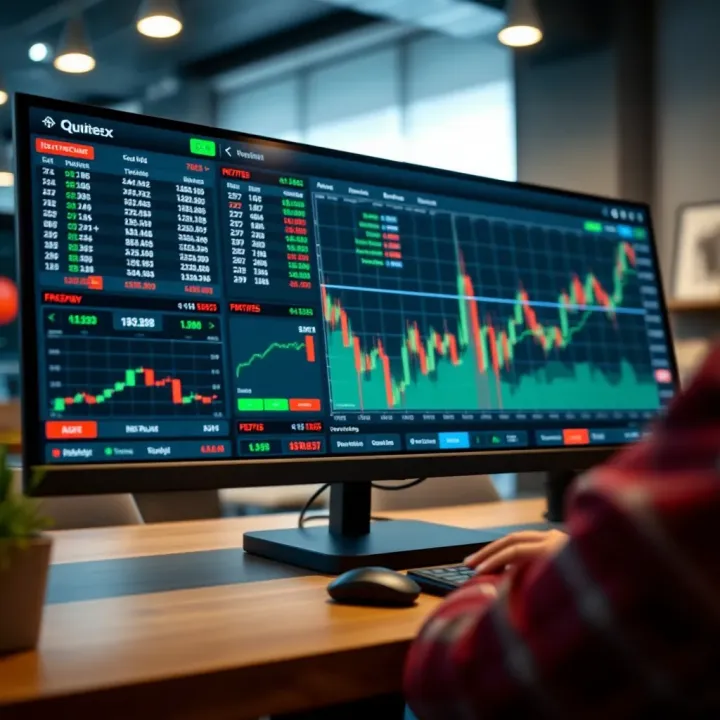
Explore Quotex, a detailed trading platform guide 📊—features, strategies, registration, safety tips & support options for Indian users. Trade smarter today!
Based on 7 reviews