
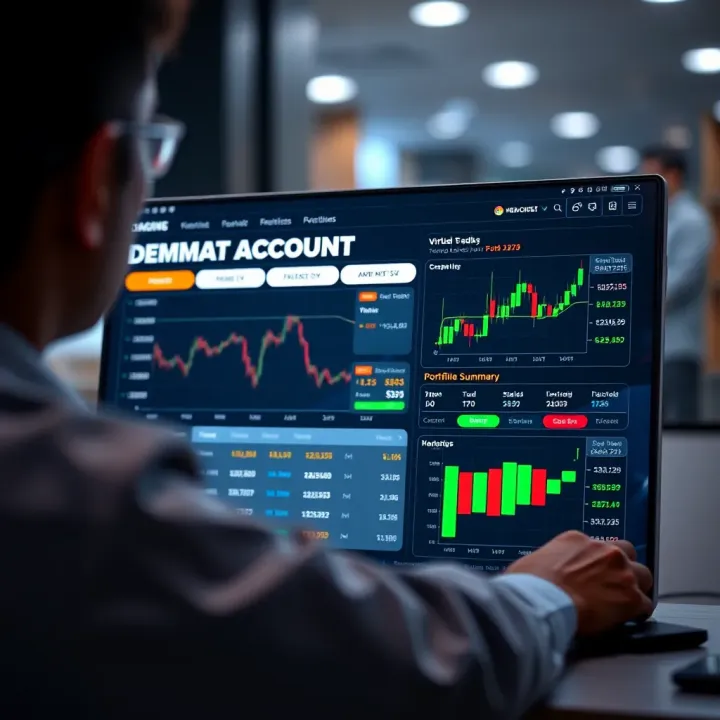
Understanding Demo Demat Account for Investors
📈 Discover how a demo demat account helps Indian investors practise stock trading risk-free, compare with real accounts, and build confidence before investing ₹1 lakh or more.
Edited By
Sophie Richards
A demo account is a practising platform offered by many brokers and trading platforms. It lets traders and investors try their strategies and explore financial markets without risking real money. Whether it is equities, forex, commodities, or cryptocurrencies, demo accounts simulate actual trading conditions using virtual funds.
Using a demo account helps users familiarise themselves with market dynamics and platform interfaces. For example, a novice investor can test buying shares of Reliance Industries without the worry of losing capital. Meanwhile, an experienced trader can try out new approaches or algorithmic strategies safely.

These accounts usually mirror live market prices in real time or with a slight delay, offering a realistic trading experience. However, no actual ownership occurs since the funds are virtual.
Demo accounts provide a risk-free environment to learn and experiment, but they cannot fully capture the emotional and psychological pressures of live trading.
Practice trading skills before dealing with real money
Understand platform functionalities and order types
Test different markets and assets without financial exposure
Develop risk management and discipline
Bridge the learning curve from theory to practice
Many popular Indian and international brokers, such as Zerodha, Upstox, and ICICI Direct, provide demo accounts. They cater to beginners and professionals aiming to polish their strategies or learn new instruments.
Operating a demo account is straightforward. Typically, registration requires basic details, and virtual funds worth ₹1 lakh or more are credited instantly. Users can then place buy or sell orders, track performance, and analyse results.
Although demo trading is highly useful, it has limitations. You may not experience slippage, sudden price jumps, or margin calls that happen in live markets. Additionally, emotional discipline can differ when your own money is at stake.
In the upcoming sections, this article will explain how demo accounts work, highlight their pros and cons, discuss popular platforms, and offer tips to make the transition from demo to live trading smoother and smarter.
A demo account is a practice trading platform that mimics real financial markets without involving actual money. This tool is essential for traders and investors who want to learn or test before risking their capital. It offers hands-on experience in market operations, trading tools, and strategies under simulated conditions.
At its core, a demo account allows users to buy and sell assets like stocks, commodities, or currencies using virtual money instead of real funds. The main purpose is to give beginners a risk-free environment to understand market dynamics and seasoned professionals a safe space to test ideas. For example, a novice trader in Mumbai can practise buying Sensex shares to grasp price movements without losing ₹10,000 upfront.
Use of virtual money: Demo accounts provide a virtual balance, say ₹5 lakh, which traders use to place orders as if it were real. This removes financial pressure, making it easier to focus on strategy and execution. The virtual cash refreshes periodically, so users can try different approaches repeatedly without the stress of real losses.
Market data simulation: These accounts use live or slightly delayed market data to create an authentic trading experience. For instance, if Nifty hits 18,000 during market hours, the demo platform reflects this in real time or with minimal delay. This helps traders practice reacting to price changes, though it may not fully capture unexpected events like sudden market crashes or liquidity constraints.
Order types available: Most demo platforms offer various order types such as market, limit, stop-loss, and bracket orders. Testing these helps users understand how to manage entry and exit points efficiently. For example, setting a stop-loss order in a demo trade on Reliance Industries shares teaches risk management techniques applicable in live markets.
New traders practising strategies: Beginners rely heavily on demo accounts to build confidence. They learn how to navigate trading platforms and test simple strategies like buying low and selling high without fearing actual financial loss. For instance, a fresher in Delhi who wants to start trading equity derivatives can explore margin calculations safely.
Experienced traders testing new methods: Professionals often use demo accounts to experiment with advanced strategies or new asset classes. Suppose a Forex trader used only USD/INR pairs; they might try commodity futures on a demo before committing real funds, ensuring their strategy suits market conditions.
Investors exploring different markets: Investors interested in diversifying across stocks, commodities, or cryptocurrencies use demo accounts to understand each market’s specifics. For example, someone primarily investing in Indian equities might explore cryptocurrency trading through a WazirX demo account to get familiar with price volatility.
A demo account is not just a training ground but a strategic tool that bridges learning and real trading, helping users minimise mistakes when they step into live markets.
Demo accounts offer several clear advantages, especially for traders and investors keen to sharpen their skills without risking real money. They serve as a practical training ground where you can test the waters before diving into live markets. Understanding these benefits helps you make the most out of demo trading and prepare effectively for actual trading conditions.
One of the biggest advantages of demo accounts is the chance to learn without financial loss. This is particularly helpful for beginners who often feel overwhelmed by complex charts, order types, and market jargon. For example, a new trader can practise executing buy or sell orders on the Zerodha Kite demo platform using virtual funds without worrying about losing ₹10,000 in actual capital. This kind of practice builds confidence gradually and allows the trader to focus purely on understanding market behaviour and trading mechanics.
Getting familiar with the trading platform's interface itself is a key step towards smooth live trading. Demo accounts let you explore menus, charting tools, order placement windows, and reporting features without pressure. This exposure reduces fumbling when real money is on the line, especially for complex platforms like Upstox Pro or ICICI Direct.
Demo trading also helps you grasp how orders are executed. You learn the difference between market and limit orders, stop losses, and how these impact your positions. Such knowledge proves crucial during volatile market phases, when execution speed and order type can significantly affect profitability. For example, knowing how to place a stop loss correctly could save you a big loss if the market swings suddenly.

Perhaps most importantly, demo accounts provide a sandbox to try out trading strategies without risk. Whether it is intraday momentum trading or a swing trading method exploiting seasonal trends in the Indian stock market, demo testing reveals how these strategies perform under different market conditions. Many experienced traders also use demo accounts to refine new indicators or algorithmic scripts before deploying them live, avoiding costly errors.
Demo accounts are practical tools, not just theoretical exercises. Using one helps bridge the gap between knowing about trading and actually doing it with skill and discipline.
Taking advantage of these benefits can make your transition to live trading smoother and less stressful, ultimately improving your chances for financial success.
While demo accounts offer a safe space for practise, they have distinct limitations traders and investors must recognise before relying on them fully. Understanding these challenges helps set realistic expectations and avoids common pitfalls when switching to live trading.
One of the main contrasts between demo and live trading is the absence of real financial risk when using a demo account. Without actual money at stake, traders may not experience the same emotional intensity, such as fear or stress, that often influences decision-making during live trades. For example, a trader practising on Zerodha Kite’s demo might take higher risks or enter multiple trades simultaneously because losses don’t affect their capital.
This lack of real-money pressure can distort realistic judgement. When the stakes are artificial, some important psychological factors like hesitation before placing a large order or the urge to close a losing position prematurely often remain untested. Traders should be cautious about assuming performance in a demo environment will directly translate to success on live platforms.
The risk of becoming overconfident is another psychological factor tied to demo accounts. Performing well without real money can give a false sense of ability. For instance, a trader might repeatedly achieve positive returns on a simulated account and decide to enter live trades with larger sums hastily.
This overconfidence usually ignores market realities like emotional stress, transaction costs, or sudden price swings experienced in live markets. Such a mismatch might lead to bigger losses when the safety net of virtual funds no longer exists. Therefore, even consistent profits in demo trading should be treated as learning milestones rather than guarantees.
Demo accounts typically use either delayed or simulated market data to imitate live trading. The prices shown might be lagging by a few seconds or may not perfectly reflect live market fluctuations. For example, a commodity trade simulated on ICICI Direct’s demo platform might show prices that trail behind actual futures prices on the MCX exchange.
This discrepancy affects timing and the accuracy of executing trading strategies that rely on real-time data, like scalping or high-frequency strategies. Traders need to remember that demo account prices are only approximate representations and could mislead timing and decision-making.
Unlike live markets, demo accounts generally do not replicate slippage—the difference between expected price and the actual execution price—or liquidity constraints accurately. Markets with thin liquidity, such as small-cap stocks or certain commodities during monsoon season, may cause orders to execute at less favourable prices.
In practical terms, a trader practising on a demo platform like Upstox Pro may consistently place market orders with ideal fills. However, in live trading, those same orders could face delays or partial fills due to order book depth. Recognising these differences helps set pragmatic expectations regarding execution risks.
Demo accounts sometimes restrict access to advanced features available in live trading or impose time limits on usage. This could include limited tools for technical analysis, fewer order types, or disabled margin trading options. For example, some NSE-backed simulators might disable options trading features in demo mode.
These restrictions can limit the demo account’s effectiveness in simulating full-market conditions or testing comprehensive strategies. Also, demo accounts might expire after a few weeks or months, requiring users to create fresh accounts, which may disrupt continuous practise.
Traders should view demo accounts as training wheels—not a perfect substitute for live market experience. A balanced understanding of their limitations ensures better preparation for the realities of trading and investing.
In summary, demos offer valuable risk-free practise but differ markedly from live trading in psychological pressure, market accuracy, and feature availability. Awareness of these challenges helps traders avoid false confidence and prepares them for the complex environment of real money markets.
Using a demo account well can make a big difference when moving towards live trading. It’s not just about practising trades; it’s about building good habits, understanding risks, and getting comfortable with the trading environment. Whether you’re a newbie or experienced, treating your demo trades seriously provides practical benefits by setting a strong foundation.
Setting achievable goals while using a demo account helps you stay focused and track progress. Instead of aiming to double the virtual funds overnight, aim for steady, consistent gains that reflect market conditions. For example, setting a goal to achieve a 2–3% monthly return on your demo funds mirrors a disciplined approach you would use in live trading. It keeps expectations in check and teaches patience.
Define what you want to learn: mastering technical indicators, improving entry and exit timing, or understanding risk-reward ratios. Breaking your learning into smaller targets, like practising spot orders today and limit orders tomorrow, helps you progress without getting overwhelmed.
One of the biggest lessons from using a demo account is learning discipline. Follow a trading plan, set stop-loss orders, and stick to them even when the virtual money isn’t at stake. This trains you to control emotions like greed and fear, which usually disrupt real trading.
Risk management involves deciding how much you’re willing to lose on each trade before entering. For instance, risking 1–2% of your demo capital per trade is a good practice to develop. This way, you learn to protect your capital, a vital skill when you switch to live trading.
When you shift from demo to live trading, begin with smaller amounts. Putting in ₹5,000 to ₹10,000 initially helps manage the psychological pressure of real money loss. This cautious approach lets you apply the lessons from your demo experience while adjusting to real market emotions.
For example, if you practised scalping strategies on demo, try them with small funds first on platforms like Zerodha or Upstox which are popular in India. This helps you gain confidence without risking heavy losses.
Documenting every trade on your demo account is crucial. Maintain a simple journal noting the reasons behind each trade, entry and exit points, profit or loss, and lessons learned. This habit helps identify strong strategies and mistakes to avoid.
Record-keeping guides you to fine-tune your approach, ensuring you don’t repeat errors when trading live. It also provides a reference for which tactics work best in varying market conditions, sharpening your skills effectively.
Treat your demo trading as seriously as real trading; discipline, goal setting, and reflection prepare you better for the live market challenges.
By following these steps—setting realistic goals, practising discipline, and transitioning carefully—you use demo accounts to build a strong trading foundation instead of just playing around with virtual money.
Demo accounts can feel quite different depending on the platform you use. In India, several popular platforms offer demo accounts tailored for traders and investors across different asset classes like stocks, forex, commodities, and cryptocurrencies. Getting familiar with platforms that reflect real market conditions in India helps users transition to live trading smoothly and confidently.
NSE and BSE backed simulators provide demo environments that mimic trading on the National Stock Exchange (NSE) and Bombay Stock Exchange (BSE), which are the backbone of India's equity market. These simulators give access to live-ish market data and allow practising with actual stocks and derivatives traded in India. This is especially useful for beginners aiming to understand order types, settlement processes, and the timing of trades without any monetary risks.
Zerodha Kite is one of the most preferred platforms for retail traders in India. Its demo account replicates the live trading experience closely, with access to Indian equities, futures, options, and currencies. Zerodha's user-friendly interface makes it easier to navigate complex market features, plus its charting tools and indicators help traders test strategies effectively in a risk-free setting.
Upstox Pro offers a demo account that supports trading across stocks, commodities, and currency derivatives. It’s known for its clean design and quick execution, making it ideal for traders who want to learn order types like bracket and cover orders. Practising on Upstox Pro helps users get comfortable with the app’s flow and prepare for real-time market volatility.
MT5 demo accounts (MetaTrader 5) hold a significant place in forex and commodity trading. Though forex trading is limited in India, MT5 offers commodity contracts and currency pairs available on Indian platforms. Using its demo setup helps traders understand how leverage works, observe price movements in real-time, and manage risk through stop-loss and take-profit orders.
ICICI Direct commodity platform provides another popular demo opportunity, especially for those interested in commodities like gold, silver, and crude oil. The platform reflects Indian commodity market price feeds and allows practising with realistic margin requirements. This suits investors focusing on hedging or speculative commodity trades within India's regulated ecosystem.
WazirX test accounts enable users to try out crypto trading without real exposure. Given the volatility of cryptocurrencies, practising on WazirX helps traders get used to order types and market depth specific to Indian users. Plus, the demo helps beginners avoid losses while exploring digital assets like Bitcoin and Ethereum.
CoinDCX trading simulators offer another crypto demo environment catering to Indian investors. The platform emphasises user education through its simulator which mirrors actual market conditions and lets users explore various digital tokens safely. Practising here builds confidence before moving on to live crypto investments where market swings can be steep.
Using demo accounts from these Indian platforms lets you practise in an environment close to real trading, reducing surprises when you go live. Choosing the right demo platform depends on your focus area—whether stocks, commodities, forex, or crypto—to build expertise with realistic trading conditions.
Understanding the differences between demo trading and live trading is essential for anyone planning to step into real markets. Demo accounts provide no financial risk but lack certain real-world dynamics that impact actual trading decisions and outcomes.
One major difference lies in the emotional and financial pressure involved. With demo trading, you use virtual money, so there’s no real loss if a trade goes wrong. This often leads to more risk-taking and less cautious decisions. However, in live trading, actual money is at stake. For example, a trader investing ₹1 lakh in the stock market may hesitate before making speculative trades, knowing a real loss hurts their capital. Emotional stress, including fear and greed, plays a big role when real funds are involved, impacting decision-making. Recognising this shift helps traders prepare mentally before moving from demo to live.
Another key aspect is order execution. Demo platforms often provide idealised conditions where orders execute instantly at expected prices without slippage or partial fills. In reality, live markets can be volatile. For instance, while placing an order on Zerodha Kite, you might experience slippage due to low liquidity or sudden price movements. Moreover, large trades can influence market prices, especially in less liquid stocks or commodity contracts, affecting your execution price. Demo accounts usually can't replicate such impacts. Knowing this difference is vital to adjust strategies and expectations appropriately.
While demo trading is excellent for familiarising yourself with platforms and testing strategies, the learning experience differs significantly. Demo environments lack the psychological weight and complex market dynamics present in live trading. Nevertheless, skills like chart reading, understanding order types, and practising risk management can be well developed through demo use. Traders should gradually increase their live exposure—starting with small investments—to bridge the gap effectively. Keeping detailed records of both demo and live trades aids in identifying behavioural patterns and improving decision-making.
Transitioning from demo to live trading requires adapting to heightened emotional pressure, real-time market conditions, and order execution realities. Preparing for these differences improves trading confidence and performance.
Appreciating these nuances helps traders and investors avoid surprises and build a smoother path into live financial markets.
📈 Discover how a demo demat account helps Indian investors practise stock trading risk-free, compare with real accounts, and build confidence before investing ₹1 lakh or more.

📈 Explore demo trading in forex to practise strategies safely without losing real money. Learn its pros, cons and tips, ideal for Indian investors preparing for live trading.
Learn demo intraday trading 🕒 in India with practical tips on platforms, features, and skill-building strategies—trade confidently before risking real money 📈💡.

Explore Quotex Trade for Indian traders 🇮🇳—learn how to register, trade strategies, payment methods, risks, and tips for safe online binary options trading 💹
Based on 12 reviews