

Best Option Trading Telegram Channels for Indian Traders
Looking to pick the best option trading Telegram channel in India? Learn how to check credibility, spot risks, and extract maximum value from top channels 📈📲
Edited By
Henry Foster
Urban trading hubs have been the beating heart of economies for centuries. Their strategic locations, infrastructure, and access to markets turn cities into powerhouses for commerce and trade. In India, cities like Mumbai, Delhi, Chennai, Kolkata, and Bengaluru have emerged as critical nodes, driving business activities across diverse sectors.
These city trading centres influence not just regional but national economic trajectories. Mumbai’s role as the financial capital, with institutions like the Bombay Stock Exchange (BSE) and National Stock Exchange (NSE), places it at the centre of India’s capital markets. Similarly, Bengaluru’s tech trade ecosystem connects India to global IT demand, while Chennai's port-driven commerce facilitates heavy exports and manufacturing.
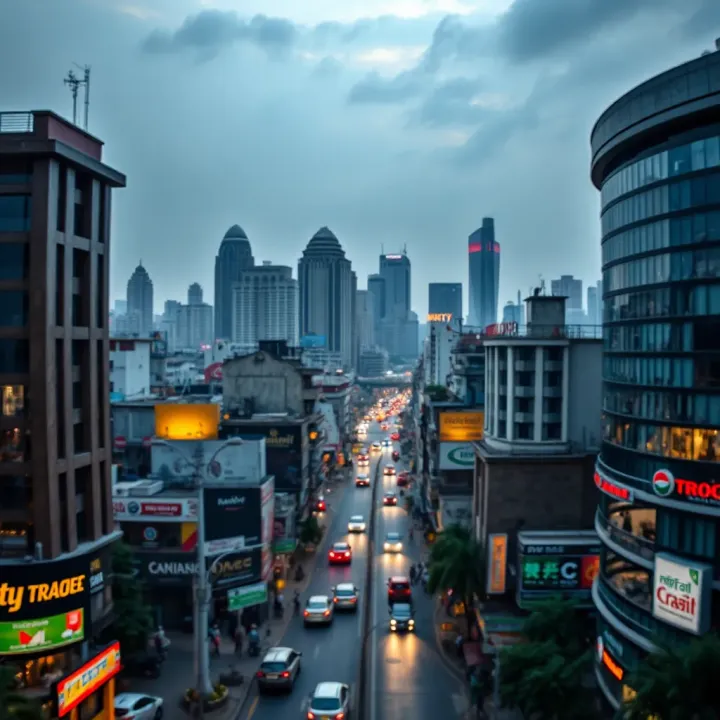
City trading hubs are more than just marketplaces; they serve as innovation centres, financial ecosystems, and employment engines shaping India’s economic future.
Capital Access: Cities attract investments from both domestic and international sources, facilitating capital flow essential to growth.
Industry Clusters: From textile in Surat to diamond trading in Mumbai’s Zaveri Bazaar, cities concentrate industries that boost efficiency and create jobs.
Infrastructure: Connectivity by road, rail, air, and digital networks supports smooth trade operations.
Regulatory Framework: Proximity to government institutions and regulators like SEBI helps businesses stay compliant and access policy updates faster.
Despite their strengths, city trading centres face hurdles such as congestion, pollution, high real estate costs, and infrastructure strain. These challenges impact the ease of doing business and often prompt industries to look towards tier-2 or tier-3 cities. Managing this urban stress requires smart city planning, improved logistics, and digital transformation.
Urban trading powerhouses stand at the confluence of opportunity and complexity. Recognising their historical context, economic roles, and prevailing challenges is vital for traders, investors, and policy makers aiming to tap India's economic pulse through these hubs.
Urban trading centres are the nerve centres of economic activity and commercial exchange in cities. Recognising their significance helps traders, investors, and analysts grasp how these hubs influence regional and national markets. These centres not only facilitate the flow of goods and capital but also drive innovation and employment in urban economies.
Understanding the dynamics of urban trading centres helps evaluate market potential, optimise investment strategies, and anticipate shifts in economic trends. For instance, Mumbai's diamond and textiles markets continue to shape global supply chains, highlighting how urban trading centres can impact both local livelihoods and international trade.
The term 'City Traders Imperium' refers to a concentrated urban economy where trading activities dominate and shape the city’s economic character. This imperium is marked by a network of markets, trading firms, financial institutions, and support infrastructure that collectively create a robust trading ecosystem. Such urban hubs wield significant influence, attracting business activity, investment, and skilled talent.
This concept goes beyond traditional market places, embracing modern trading powerhouses that integrate financial services, logistics, technology, and regulatory frameworks. It implies a city's dominance not only in goods exchange but also in managing capital flows and data across sectors.
India’s trading cities evolved from ancient times, with places like Surat and Calicut serving as maritime trade gateways. Over time, cities like Mumbai, Chennai, and Kolkata emerged as crucial colonial ports, facilitating large-scale export-import activities. Post-independence, these metropolises transformed into financial and industrial centres, with Mumbai housing the Bombay Stock Exchange (BSE), India’s oldest stock exchange.
The practical relevance lies in the continuity of these centres as linchpins of India's commercial networks. Their long-standing infrastructure supports evolving industries, from textiles to technology, enabling traders to leverage historical market depth while adapting to modern needs.
City trading empires are not unique to India. London’s financial district, with the London Stock Exchange and the City’s banking giants, has shaped global finance for centuries. Similarly, Singapore’s port and trading zones have made it a vital international logistics and commodity hub.
Such examples offer lessons for Indian cities: diversifying trade verticals, investing in infrastructure, and integrating technology can amplify a city's stature as a trading powerhouse. Observing these global centres helps traders understand competitive strategies and regulatory environments essential for sustaining urban trade dominance.
Urban trading centres shape more than markets—they build the economic backbone for cities, influencing everything from employment patterns to financial stability.
Key takeaways:
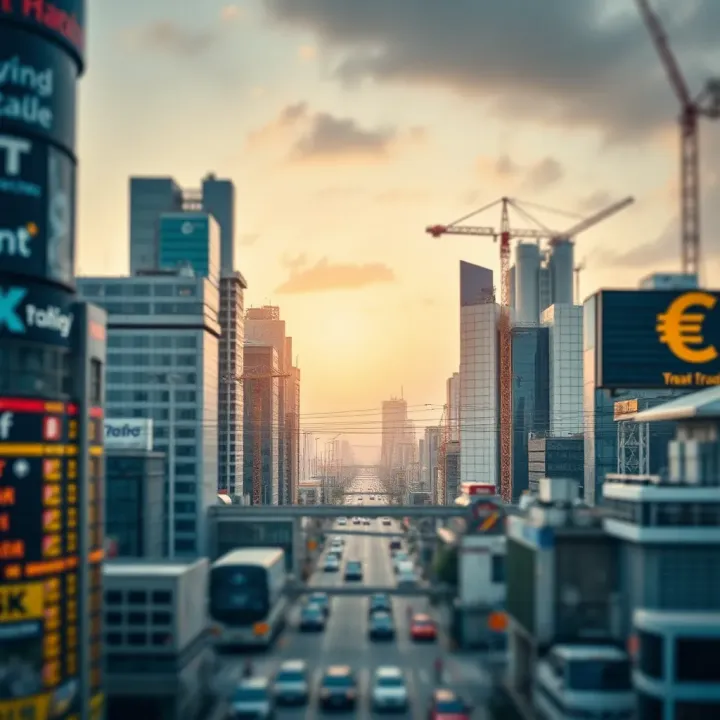
Urban trading centres combine infrastructure, finance, and commerce to create economic powerhouses.
India's cities carry historical trading legacies influencing modern commerce.
Global trading cities exemplify best practices in infrastructure and regulation relevant to India's urban hubs.
Economic conditions shape how cities develop as trading hubs. Strong infrastructure, reliable connectivity, and vibrant financial markets are the backbone of urban trade powerhouses. These factors determine how quickly goods and services move, how funds circulate, and how businesses scale efficiently.
Transport networks form the lifeline of city trading centres. Efficient roads, metro systems, railways, and ports enable seamless movement of goods and people. Take Mumbai, for example — its port handles huge cargo volumes, feeding the city’s wholesale markets and export-import activities. Similarly, Bengaluru’s road and rail connectivity supports a wide range of trade across Karnataka and neighbouring states.
Without strong transport links, delays and higher costs undermine competitiveness. Urban centres with congested or poor infrastructure find traders shifting to better-connected cities or even nearby smaller towns with superior facilities. Hence, governments and private players often invest in expanding highways, upgrading logistics parks, and developing multi-modal transport hubs to ease trade flow.
Digital infrastructure has become equally important alongside physical connectivity. Cities equipped with fast internet, 5G coverage, and extensive cloud service presence give traders a huge edge. It enables real-time inventory management, quicker payments, and efficient communication with suppliers and customers.
For Indian cities, digital integration is transforming trading ecosystems. Hyderabad’s HITEC City and Gurugram’s Cyber City illustrate how IT parks boost all business layers from finance to supply chain tech. The presence of India Stack’s APIs and platforms like UPI allows traders to transact smoothly across regions, tapping into nationwide markets instantly.
Stock exchanges like the Bombay Stock Exchange (BSE) and National Stock Exchange (NSE) anchor urban financial ecosystems. They provide capital access to businesses, including traders and wholesalers, allowing expansion and risk management. Both BSE and NSE headquartered in Mumbai serve millions of investors and companies daily, fostering liquidity which is vital for urban trade financing.
Alongside stock markets, banking and lending ecosystems form the credit backbone sustaining trade. Urban centres house countless bank branches, NBFCs, and fintech lenders offering working capital loans, trade credits, and other financial products tailored for traders and MSMEs.
For instance, the presence of public and private banks in cities like Delhi and Chennai means faster loan approvals and advanced digital banking services. Platforms like PhonePe and Google Pay complement this by providing quick digital wallets, reducing dependency on cash and informal credit. These financial ecosystems help urban traders manage cash flows, invest in inventory, and meet market demands promptly.
Economic strength in city trading centres depends heavily on a balanced mix of physical infrastructure and financial institutions enabling smooth operations and growth.
Efficient transport lowers logistics cost and facilitates trade volume.
Digital infrastructure accelerates transaction speed and business reach.
Stock exchanges supply growth capital critical for scaling.
Robust banking systems provide necessary credit and payment tools.
Together, these economic factors provide the framework that powers City Traders Imperium across urban India and beyond.
Key industries form the backbone of thriving city trading hubs. They generate the volume, diversity, and innovation needed to sustain urban economies and draw traders, investors, and customers alike. Understanding these industries helps grasp why certain cities grow as commercial powerhouses.
Traditional markets have long been the lifeblood of urban trade centres. Places like Delhi’s Chandni Chowk or Mumbai’s Crawford Market still bustle with wholesalers and small-scale retailers supplying vast product varieties at competitive prices. These markets support local vendors and small traders by offering accessible spaces and a rich mix of goods.
On the flip side, modern malls and shopping complexes have altered the retail landscape. They attract larger consumers who value convenience, branded products, and organised shopping experiences. For example, Chennai’s Express Avenue or Bengaluru’s Phoenix Marketcity combine entertainment, dining, and retail under one roof, catering to urban middle classes with spending power. Both traditional and modern retail coexist, targeting different customer segments, which keeps city trading diverse and vibrant.
Export-import business hubs sharpen a city’s global connect. Cities like Mumbai and Mundra have grown around ports and logistics centres facilitating international trade. Exporters of textiles from Surat or IT hardware from Bengaluru rely on well-established shipping and customs infrastructure. These hubs not only boost local manufacturing but also attract foreign investment, making urban trade part of global supply chains.
IT parks and innovation centres increasingly shape city trade dynamics. In Bengaluru’s Whitefield or Hyderabad’s HITEC City, tech companies and start-ups thrive with well-developed infrastructure and access to skilled talent. These centres promote knowledge-driven trade, including software exports and digital services that expand traditional commerce's boundaries.
Fintech and e-commerce are rapidly transforming urban markets. Platforms like Paytm, PhonePe, and Flipkart enable smooth transactions and product availability across cities and towns. Fintech innovations simplify credit access for businesses and consumers, while e-commerce opens new channels for wholesalers and retailers. This integration of technology ensures that urban trade is not just confined to physical markets but thrives on digital connectivity too.
The blend of traditional markets with tech-forward ecosystems makes Indian city trading hubs uniquely dynamic, offering multiple growth avenues for investors and traders alike.
Overall, these industries collectively empower cities to dominate trade by balancing heritage with modernity and tapping into both local and global opportunities.
Urban trading powerhouses confront several hurdles that can restrict their growth and efficiency. Traders, investors, and analysts should recognise these obstacles because they directly affect operational costs, profitability, and market competitiveness. Major challenges include navigating regulatory landscapes, dealing with urban congestion, and managing limited resources.
SEBI and RBI regulations play a significant role in shaping trading activities in cities. The Securities and Exchange Board of India (SEBI) oversees market transparency, investor protection, and fair practices in stock exchanges like the Bombay Stock Exchange (BSE) and National Stock Exchange (NSE). Meanwhile, the Reserve Bank of India (RBI) regulates banking operations and financial institutions that support trading infrastructure. For example, RBI’s norms on lending and payments affect liquidity for city traders. Compliance with these regulations is essential but can be complex, requiring firms to dedicate considerable resources to legal and audit functions.
GST implementation impacts have further changed the trading environment in urban centres. The Goods and Services Tax (GST), introduced in 2017, unified multiple indirect taxes but presented initial challenges in invoicing, filing returns, and input credit claims—affecting cash flow for many trading businesses. Traders operating in multiple states benefit now from simplified tax structures and faster movement of goods, yet compliance remains demanding. For instance, wholesale markets in cities like Delhi and Chennai had to upgrade their accounting systems to meet GST requirements, influencing daily trading operations and costing time and effort.
Traffic and logistics bottlenecks are common issues in densely packed cities. Congested roads slow down the movement of goods, increasing transport costs and causing delays in deliveries. This is particularly critical for perishables or time-sensitive products. Mumbai’s wholesale markets face daily challenges due to narrow streets and frequent traffic jams, affecting inventory turnover and raising operational overheads. Efficient logistics planning, including off-peak deliveries and better warehouse locations, can ease this pressure but require coordinated efforts across stakeholders.
Sustainability and resource management are gaining importance as trading hubs consume vast amounts of water, electricity, and land. Urban areas often struggle with limited resources, impacting long-term viability. For example, cities like Bengaluru face water shortages that affect industrial and trading establishments alike. Waste management, energy-efficient buildings, and sustainable transport options are becoming non-negotiable aspects for traders focusing on cost reduction and regulatory compliance. Sustainable practices help preserve urban resources while enhancing brand reputation among environmentally conscious customers.
Understanding these challenges helps traders and policymakers prioritise solutions that sustain the growth of city trading empires without compromising urban living standards or regulatory mandates.
The future of city-based trading hubs lies in their ability to adapt to emerging economic landscapes and technological changes. As urban centres evolve, traders and investors must watch how newly rising cities and digital innovations reshape trading dynamics and create fresh opportunities. Understanding these shifts helps professionals anticipate market trends and make informed decisions.
Tier-2 and Tier-3 city potential: Tier-2 and Tier-3 cities in India are increasingly becoming attractive for trading activities due to improved infrastructure and rising local incomes. Cities like Jaipur, Indore, and Coimbatore are developing logistics parks, warehousing facilities, and better connectivity, making them viable alternatives to traditional metros. For traders, this means expanding markets beyond saturated urban centres and tapping into domestic consumption growth driven by these cities.
These cities also offer lower operating costs and a growing consumer base, which encourages local businesses to scale. For example, Coimbatore's textile hubs have expanded export capacities, partly due to upgrades in transport and digital access. Recognising this shift can help investors diversify portfolios by including businesses rooted in these emerging centres.
Government initiatives and policies: Government schemes have played a significant role in supporting the growth of non-metro trading hubs. Programs like the Smart Cities Mission and the Atma Nirbhar Bharat initiative push for regional development and self-reliance, respectively, encouraging investments in infrastructure and ease of doing business outside metros.
On top of that, policies favouring micro, small and medium enterprises (MSMEs) have created a more conducive environment for local traders to formalise operations and access credit. Initiatives such as the Production Linked Incentive (PLI) Scheme incentivise manufacturing in tier-2 and tier-3 cities, indirectly boosting trade through increased production and demand for support services.
Role of ONDC and India Stack: The Open Network for Digital Commerce (ONDC) represents a shift towards a more decentralised and inclusive e-commerce environment. By allowing multiple platforms to interoperate, ONDC helps smaller traders and businesses in lesser-known cities connect with wider markets without relying exclusively on major aggregators.
India Stack, with its APIs for digital identity (Aadhaar), payments (UPI), and document management (DigiLocker), simplifies processes for traders by reducing paperwork and fraud risks. These technologies lower barriers to entry for traders in tier-2 and tier-3 cities, helping them tap into larger networks and financial services efficiently.
Digital payment trends and UPI: Unified Payments Interface (UPI) has transformed payments in Indian urban trading hubs by offering instant and secure transactions through mobile phones. The widespread adoption of UPI, even in smaller cities, has increased transaction speed and transparency, which benefits traders and customers alike.
The rise of digital wallets and bank-linked UPI apps has also widened consumer access, enabling traders to capture sales from digitally savvy buyers. For instance, during festival seasons, many sellers in places like Surat or Lucknow report significant sales growth through online and UPI-based payments. Embracing these digital payment solutions is now essential for traders aiming to stay competitive and meet evolving customer preferences.
The ability to combine emerging city growth with strong digital infrastructure will define the future strength of urban trading powerhouses in India.
In summary, the future outlook for city-based trading powerhouses involves recognising new urban markets and integrating technology that streamlines trade and payments. Staying tuned to government policies and digital trends can help traders and investors make timely moves aligned with India's evolving economic fabric.
Looking to pick the best option trading Telegram channel in India? Learn how to check credibility, spot risks, and extract maximum value from top channels 📈📲

Learn how demo trading websites help Indian traders practice without risking real money 📈. Discover top platforms, key features, and tips to sharpen your skills safely.

Find the best mobile phones for trading in India with real-time market access, fast updates, secure transactions & budget-friendly options 🛒📱💹

📈 Find the best trading website for Indian investors by comparing fees, security, usability, research tools, and mobile access. Make smart, secure investments today!
Based on 14 reviews